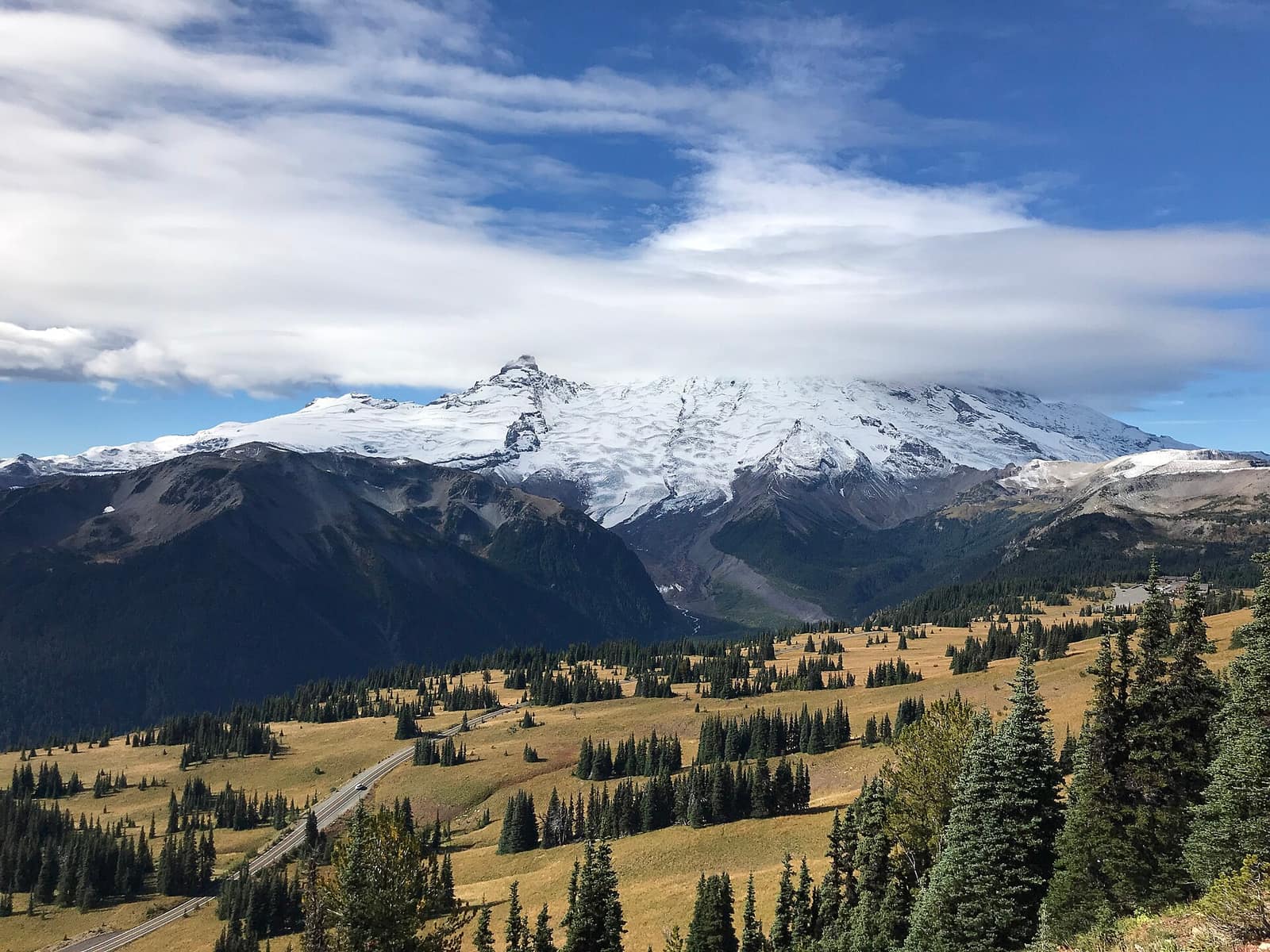
The sky above Mount Rainier goes pink before most visitors finish breakfast. If you’re watching from the Sunrise area, at 6,400 feet, you’re already above the tree line, and the alpenglow spreads down the glaciated flanks of the mountain long before it reaches the valley floors below. A Mount Rainier sunrise from this high-elevation area is one of those experiences that rewards an early alarm: you won’t need to hike far or scramble for a viewpoint. The road delivers you to subalpine meadows with an unobstructed line of sight to the summit and, on clear mornings, the mountain’s shadow cast across the sky to the west.
This guide covers the Sunrise area in full: what to expect when you arrive, which trails to hike, when to go for wildflowers or solitude, and the practical details for driving up from Seattle or Tacoma.
What Is the Sunrise Area?
Sunrise is Mount Rainier National Park’s northeastern visitor zone, accessed via Highway 410 near the town of Enumclaw. At 6,400 feet, it’s the highest point reachable by paved road in Washington State. That elevation comes with a shorter season: the Sunrise Road typically opens in early July and closes in late September or early October, depending on snowpack. Compare that to Paradise on the park’s south side, which stays open from mid-May through fall.
The area has a small visitor center, open daily during the season (usually 10am to 6pm), along with restrooms and a basic snack bar. There’s no full-service restaurant or lodging. What it does have is room. Sunrise draws far fewer visitors than Paradise, so even on a busy August weekend you can find quiet stretches of trail and uncrowded views of Emmons Glacier, the largest glacier in the contiguous United States.
The subalpine meadows around Sunrise bloom with wildflowers in late July and August: lupine, Indian paintbrush, bistort, and broadleaf arnica spread across the slopes below the ridge. On a clear day, views extend north to the northern Cascades and east across the rolling hills of the park’s interior. Mount Baker appears to the north and Mount Adams to the south from the ridgeline above the visitor center.
Getting to Sunrise from the park’s west side (Paradise or Longmire) is not a direct drive. You need to exit the park, circle around via Highway 410, and re-enter at the White River entrance. Budget 75 to 90 minutes between the two areas.
Watching Sunrise from Sunrise
The Sunrise area faces northwest, which means the mountain fills the sky in front of you as morning light builds from the east. In the hour before sunrise, Rainier’s summit appears as a dark silhouette against a lightening sky. As the sun clears the ridge to your east, color spreads down the mountain from the top: the glaciers move from deep pink to orange to gold. It lasts 10 to 20 minutes before the light flattens into daytime white.
The combination of foreground meadow still in shadow and lit glaciers in the background creates strong contrast for photography. By 8am that contrast is gone.
The early morning window is also simply quieter. Sunrise parking fills by 9 or 10am on summer weekends. Arrive before 6:30am and you’ll have the lot to yourself. The air at 6,400 feet is cold even in August, typically in the upper 30s to mid-40s Fahrenheit before sunrise. Bring layers you can strip off as temperatures climb through the morning.
Approximate sunrise times at this elevation in Washington: early July around 5:15am, mid-August around 5:50am, mid-September around 6:45am. Any weather app will give you the exact time for your date. The NPS website also publishes seasonal sunrise and sunset data for the park.
Best Day Hikes from Sunrise
The Sunrise area serves as the trailhead for several of the park’s best high-elevation hikes. Most trails depart from the parking lot or the visitor center and require no special permits for day use (the park entrance fee covers you).
Sourdough Ridge Trail: An easy out-and-back along the ridge northeast of the visitor center. The first mile is mostly flat and opens up 360-degree views: Rainier to the southwest, Mount Baker to the north, the Cascades spreading in both directions. Total round trip to the main viewpoint: about 1.5 miles. This is the best choice for an early sunrise walk because the path is obvious even in pre-dawn light, and you don’t need to gain significant elevation to reach a clear vantage point.
Dege Peak: An extension of the Sourdough Ridge Trail. Continue east along the ridge for another 2 miles to reach the Dege Peak summit at 7,006 feet. Total from the parking area: about 4 miles round trip, 900 feet of elevation gain. Mount Adams becomes visible to the south from the peak, adding a second major volcanic summit to the view.
Burroughs Mountain Loop: The most demanding option from Sunrise. First Burroughs Mountain sits at 7,400 feet; Second Burroughs reaches 7,800 feet. The upper sections feel more like high alpine tundra than subalpine meadow. The trail passes above Emmons Glacier, the closest most visitors will ever get to the ice. Total loop to Second Burroughs and back: about 7 miles, 1,500 feet of gain. Snow can cover this route through late July. Check the park’s trail conditions page before heading out.
Fremont Lookout: A 5.6-mile round trip to a historic fire lookout at 7,181 feet. The trail starts near Frozen Lake, about a mile from the main parking lot (drive to the Frozen Lake trailhead if space allows, or walk from Sunrise). The lookout still stands and offers views into the White River valley and north toward the Cascades beyond the park boundary. Best visited after mid-July when snowfields on the approach melt out.
For distances, difficulty ratings, and season notes on these trails plus others across the park’s south side, the Mount Rainier day hikes guide covers both the Sunrise and Paradise areas side by side.
When to Go: Season and Timing
The Sunrise Road opens when the snowpack allows, usually somewhere between late June and early July. The National Park Service posts road opening updates on the Mount Rainier website. The road closes in late September to early October, earlier in heavy snow years.
For wildflowers: late July through mid-August. Sunrise meadows peak about two to three weeks later than Paradise because of the elevation difference. If you’re making the trip specifically for the flower display, aim for the first two weeks of August.
For fewer crowds with good weather: September is the clear choice. Daytime highs drop to the upper 50s rather than the mid-60s, but the sky tends to be clearer than summer, and the larches on the slopes above Sunrise begin their short yellow turn in late September. The parking situation improves significantly, and early morning hours feel genuinely quiet.
For sunrise specifically: July has the earliest first light (around 5:15am), but September’s later sunrise (around 6:45am) means you don’t need to set an alarm before 5am to catch it. September also has the advantage of the parking lot being noticeably less crowded at that hour.
For a month-by-month breakdown of weather windows across Washington State, including the Cascades, the best time to visit Washington State guide breaks down each season by region.
Getting There and Parking
The Sunrise area is accessed via the White River entrance on Highway 410, about 5 miles east of Greenwater and 10 miles north of Enumclaw. From Seattle, the drive is approximately 95 miles and takes about 2 hours under normal traffic. From Tacoma, it’s about 70 miles and closer to 90 minutes.
Once through the White River entrance station, follow the Sunrise Road for 17 miles to the parking area. The road is paved but steep and winding in sections. Trailers and vehicles over 21 feet are not permitted beyond White River Campground.
Parking is the main weekend challenge. The Sunrise lot holds around 300 vehicles and regularly fills to capacity by 9:30am on sunny summer days. Options if you arrive late: the road has overflow pullouts, and rangers may hold vehicles at the entrance until spaces open. Arriving before 7am solves this problem on nearly every summer day.
The Mount Rainier entrance fee is $35 per vehicle and valid for 7 days. An America the Beautiful annual pass covers it and pays for itself on the second national park visit. If you don’t have a pass and are planning a Washington road trip that includes Olympic National Park or North Cascades, the annual pass is worth buying upfront.
White River Campground, near the entrance station, offers 75 campsites for tents and smaller vehicles. Reservations open in advance on Recreation.gov and fill quickly for July and August weekends. Book as early as the system allows.
Where to Eat and Stay Near Sunrise
The Sunrise Visitor Center has a snack bar open during visitor center hours (roughly 10am to 5pm). It carries sandwiches, snacks, and hot drinks. It doesn’t open early enough for pre-sunrise visitors.
The nearest town with restaurants and gas stations is Enumclaw, about 30 miles from the White River entrance. If you’re arriving for sunrise, plan to eat breakfast in Enumclaw the evening before, or pack your own food for the parking lot. Driving from Seattle, diners along Highway 410 near Buckley and Enumclaw open early for commuters and hikers.
For lodging close to the Sunrise entrance: Enumclaw has several chain hotels and motels along Highway 410. Greenwater, closer to the park boundary, has cabin rentals that fill fast for summer weekends. Booking 3 to 4 months ahead is not excessive for August dates.
The park’s own lodging, the National Park Inn at Longmire and the Paradise Inn, sits on the south side of the mountain. Both are worth staying at, but they’re on the opposite side from Sunrise and add significant drive time to any early morning visit to this area. The Paradise at Mount Rainier visitor guide covers those properties and the south-side experience in detail.
If you have two days, the ideal combination is Paradise on the first afternoon and Sunrise on the second morning: spend the evening in Ashford or Enumclaw, then drive to the White River entrance for the early light.
The Short Version
The Sunrise area is open roughly early July through late September. It’s the highest drive-up viewpoint in Washington, and the early morning views of Mount Rainier from the subalpine meadows are worth the 5am alarm. September is the best-kept timing secret: good weather, no crowds, and turning larches. Parking fills fast on summer weekends; arrive before 7am or plan to wait. The Sourdough Ridge Trail is the easiest way to reach a clear viewpoint in 30 minutes. And if you want to hike further, Burroughs Mountain puts you closer to the glacier than almost any other trail in the park.
Hero photo: Mount Rainier and Sunrise (163a05fa-3224-4103-937d-dfb5ca310c0f) by NPS Photo, licensed Public domain, via Wikimedia Commons. Resized.
.JPG)