Most hot springs in Washington come with a parking lot. Sol Duc has a resort attached. Olympic Hot Springs has a campground. Goldmyer Hot Springs has a locked gate, a rough forest road, and a wilderness valley you’ll share with a carefully limited number of other people. Getting there requires advance planning, a reservation secured months ahead, and a willingness to earn your soak. What you find at the end is a series of natural geothermal pools in a remote Central Cascades valley about two hours east of Seattle, managed by a nonprofit that has kept the site deliberately primitive for decades. This guide covers the reservation system, the access road, what the springs are actually like, and how to plan a trip worth making.
What Is Goldmyer Hot Springs?
Goldmyer Hot Springs sits in the Okanogan-Wenatchee National Forest, deep in the Middle Fork Snoqualmie River valley east of North Bend. The springs emerge from a hillside where geothermal water surfaces at high temperature, feeding a series of pools that step down in heat as they move away from the source.
The site is managed by the Goldmyer Hot Springs Foundation, a nonprofit organization that operates under a special-use permit from the U.S. Forest Service. The foundation controls access, runs the reservation system, and maintains the minimal on-site infrastructure. Their approach is explicitly low-impact: the springs are not developed, not decorated, and not commercialized. There is no power, no food service, no amenities beyond vault toilets and a few primitive campsites.
That commitment to keeping the place as it is has worked. Goldmyer looks and feels the way backcountry hot springs should. The trade-off is that it takes real effort to get in.
The Reservation System
Every visit to Goldmyer requires an advance reservation through goldmyer.org. Walk-in access is not permitted. The daily visitor limit is strict, and slots fill fast, particularly for Saturdays and summer dates. If you want a summer weekend reservation, plan to book the moment your window opens.
A few things to understand before you reserve:
- Day visits and overnight camping are separate permit types with different fees. Check goldmyer.org for the current fee schedule, which the foundation updates periodically.
- Cancellation policies matter. If your plans change, cancel through the reservation system so the slot opens for someone else.
- Children are welcome at Goldmyer. Review the foundation’s guidelines on the reservation site for any age-specific notes on individual pools.
- Goldmyer is a clothing-optional facility. This is stated plainly on the reservation site and has been the policy throughout the foundation’s management of the site. Visitors who book are aware of it before they arrive.
- The foundation posts current road conditions and gate status on its site before each visit window. Read those updates before you leave home.
The cancellation-and-waitlist approach the foundation describes is worth understanding. A date that’s fully booked today can open up with little notice.
The Road In
From North Bend, take SE Middle Fork Road east toward the Middle Fork Snoqualmie River trailhead area. The road starts paved and progressively deteriorates into rough gravel. By the time you’re deep into the valley, you’re on a forest road that punishes low-clearance vehicles in anything other than dry summer conditions. Bring a vehicle with reasonable ground clearance. Passenger sedans have had problems on this road, particularly in fall and spring when the surface is soft.
For a significant portion of the year, the Goldmyer access gate is closed before the springs. When the gate is closed, you park at the gate and walk the remaining distance along the road. The gate position shifts seasonally, which means the total hiking distance varies depending on when you visit. The foundation’s site posts the current gate location before your visit, along with an estimate of the added distance. Plan your day accordingly: the hike in plus time at the springs plus the hike out adds up, and arriving at dark without time to soak is a real outcome if you don’t account for it.
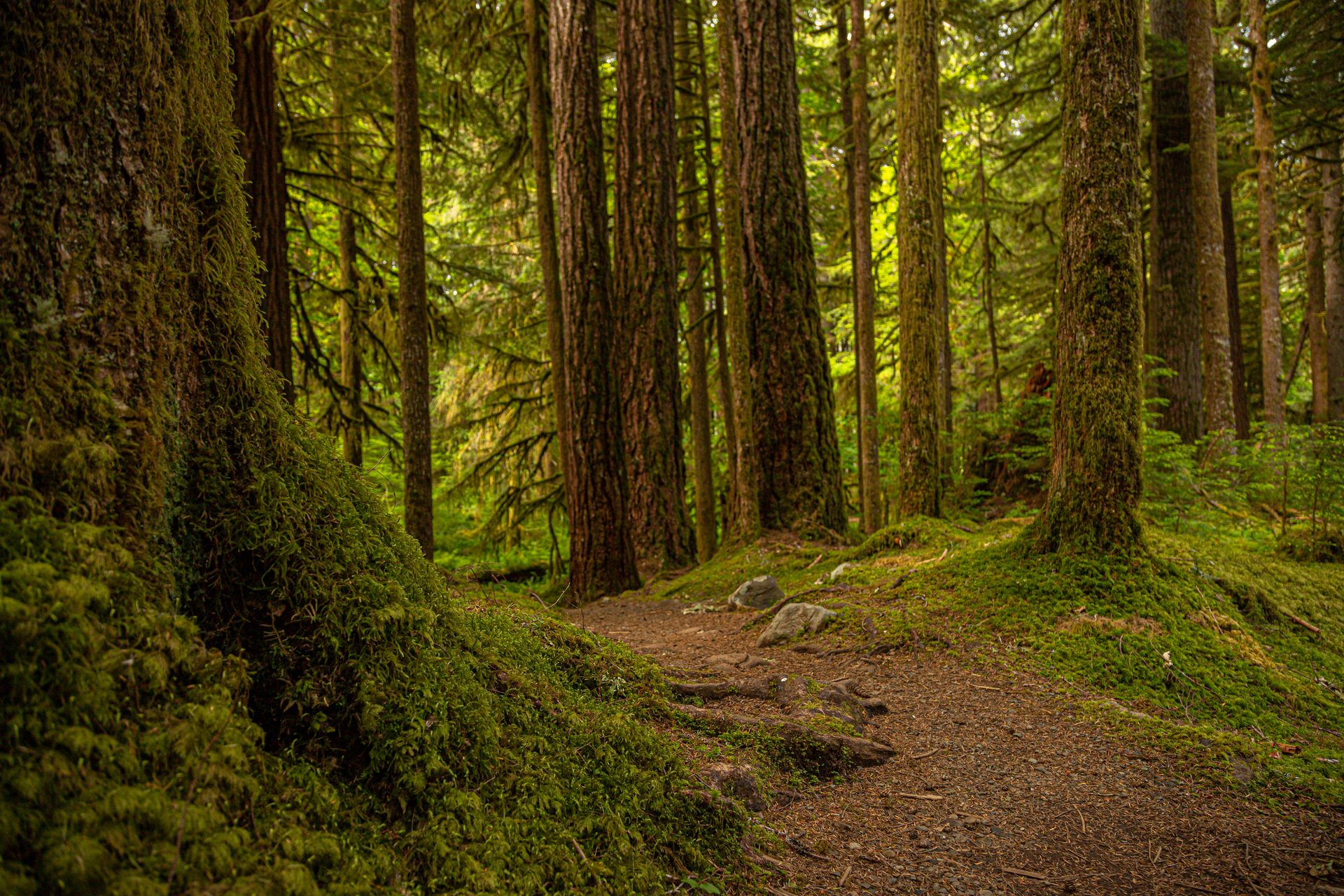
The walk itself is not difficult. The road climbs gently through old-growth Douglas fir and cedar, with the Middle Fork Snoqualmie River audible below much of the way. On clear days the peaks above the valley are visible through breaks in the canopy. It’s a genuine introduction to the landscape before you arrive, which is more than you can say for most developed hot springs.
The Springs: What to Expect
The geothermal water at Goldmyer emerges from the hillside hot enough to be visible: steam rises from the source area on cool mornings and fall days. Multiple pools sit at different points, each at a different temperature determined by how far the water has traveled from the source and how much it has mixed with cooler ambient water.
The pools nearest the source are extremely hot. The lower pools are cooler, in the range of comfortable-to-warm rather than too-intense-to-stay-in for long. Most visitors move between pools over the course of a visit, adjusting based on temperature preference and how long they’ve been soaking.
The water has a mild sulfur smell, normal for geothermal springs. It fades from notice quickly.
Infrastructure is minimal: the pools themselves, the vault toilets, the primitive campsites. The foundation asks that visitors leave the site as they found it. There are no trash cans; pack in and pack out.
Bring drinking water. Soaking in hot water for hours in a valley with no services requires more hydration than most visitors expect. A liter per person beyond what you’d bring for a hike of equivalent length is a reasonable baseline.
The springs operate at limited capacity. When you’re there, you’re one of a small number of people in a remote valley. That combination of heat, quiet, and genuine wilderness is the whole point.
Day Visit or Overnight Camping?
Most visitors come for a day visit, and that works well if you start early and account for the gate-to-springs hike. An overnight permit changes the math in meaningful ways.
Camping at Goldmyer puts you at the springs for the early morning and evening hours, when the day visitors are gone and the valley is quiet. Those windows, before the day-use crowd arrives and after they leave, are when the experience is at its most private. The trade-off is a full camping setup: tent, sleeping pad, cold nights even in August, everything packed in and out.
Overnight permits are a separate reservation category and often equally competitive with day passes, particularly in summer. Consider an off-peak option, such as a weeknight or shoulder-season weekend, where availability is better.
For visitors who want warm water without the backcountry logistics, Sol Duc Hot Springs in Olympic National Park offers a resort setting with pools, lodging, and food service within the park.
When to Go
Summer (late June through September) is when access is easiest. The gate typically opens furthest up the road, reducing the walking distance, and dry conditions make the forest road manageable for a wider range of vehicles. This is also when competition for reservations is fiercest. Book as early as the reservation window allows.
Fall (October through early November) makes a strong case for itself. The bigleaf maples along the Middle Fork Snoqualmie corridor turn yellow and drop leaves onto the road. Air temperatures drop, making the contrast between cool valley air and hot pool water feel exactly right. Reservation availability improves noticeably compared to August. Road conditions vary more in fall; check the foundation’s conditions update before you go.
Winter and early spring are for visitors who have done Goldmyer before and understand the access variability. The gate may be far back, extending the hike significantly. The road requires a high-clearance vehicle, and wet or snowy conditions can make it genuinely challenging. Some visitors find the off-season atmosphere worth the uncertainty. Others find it too variable to plan around reliably.
Washington’s shoulder seasons generally reward visitors who prepare. Our guide to the best time to visit Washington State covers conditions month by month across different regions, including the Cascades.
How Goldmyer Compares to Other Washington Hot Springs
Washington has several natural hot springs worth knowing, and they sit at very different points on the effort-to-access spectrum.
Olympic Hot Springs requires a moderate hike into the Olympic National Park backcountry. The pools are primitive and free to access once you’re in the park, and the hike is shorter than Goldmyer’s approach by a meaningful margin.
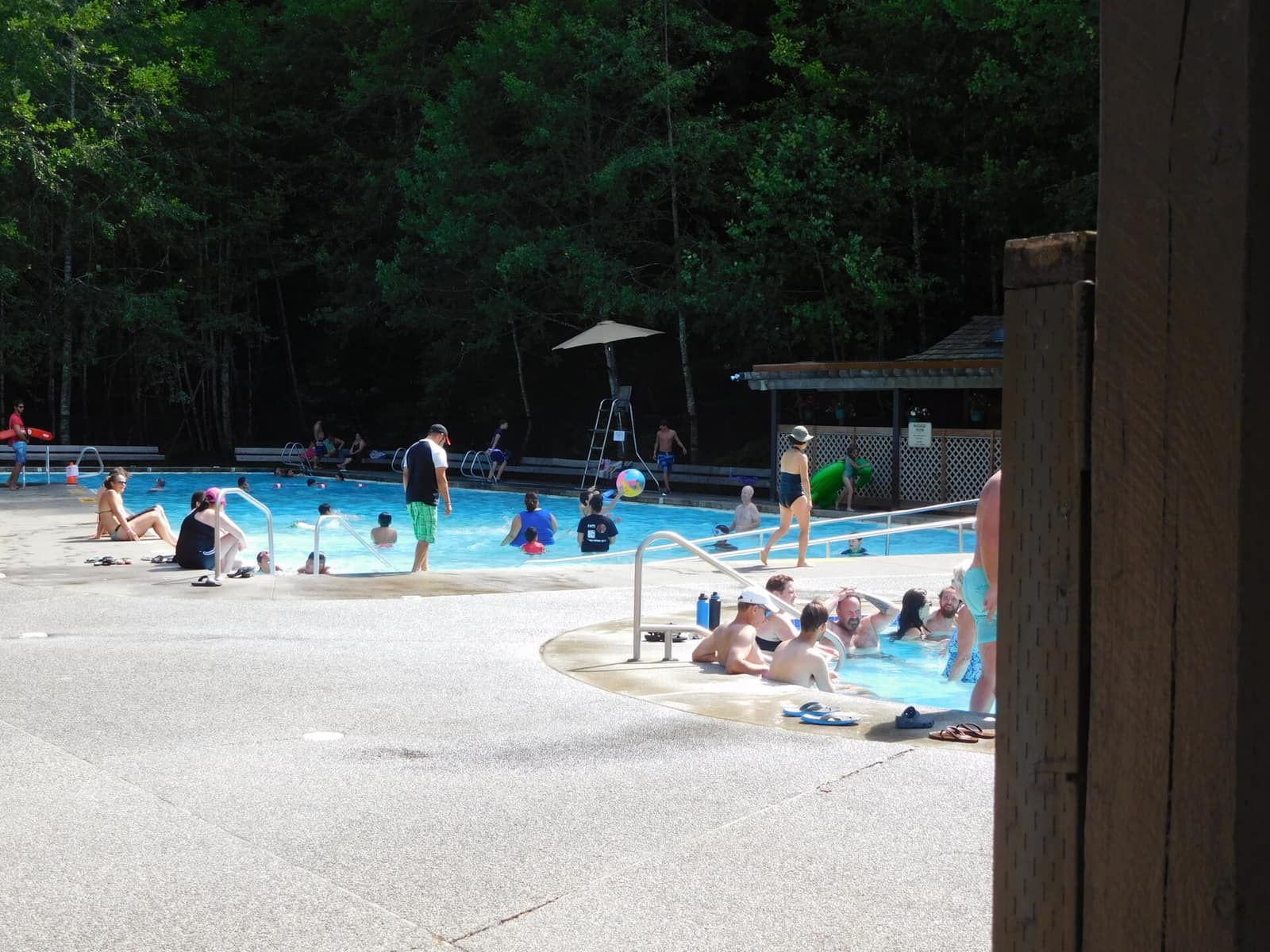
Sol Duc Hot Springs is the opposite: a developed resort inside Olympic National Park with chlorinated mineral pools, a restaurant, and on-site lodging. You can arrive without an advance soak reservation in shoulder season. It’s a comfortable experience for visitors who want warm water without backcountry conditions.
Goldmyer sits in its own category. The reservation system and the deliberate isolation are its defining features, not inconveniences. If you want a backcountry hot spring experience with minimal other visitors in a genuinely remote valley, this is the one in Washington to plan around.
For a broader look at outdoor destinations across the state, the outdoor activities section covers Washington’s wilderness options by region.
Getting There and Where to Stay Nearby
Getting there: From Seattle, take I-90 east to North Bend. Follow SE Middle Fork Road east from North Bend into the valley. Drive time from Seattle to the gate area is roughly 1.5 to 2 hours depending on traffic and road conditions. The last portion of the drive is unpaved; check current conditions on goldmyer.org before you go.
North Bend lodging: North Bend has motels and vacation rentals a short distance from the Middle Fork trailhead turnoff. Snoqualmie, five minutes west, adds more options and a larger commercial area. Stock up on food, water, and supplies before turning onto the forest road.
What to bring: Beyond hiking gear appropriate for the distance and season, bring drinking water for the soak, appropriate clothing per the facility’s policy, sandals or flip flops for moving between pools, and a change of clothes for the drive home.
The plan your trip page is a useful starting point for logistics if Goldmyer is part of a longer Washington itinerary.
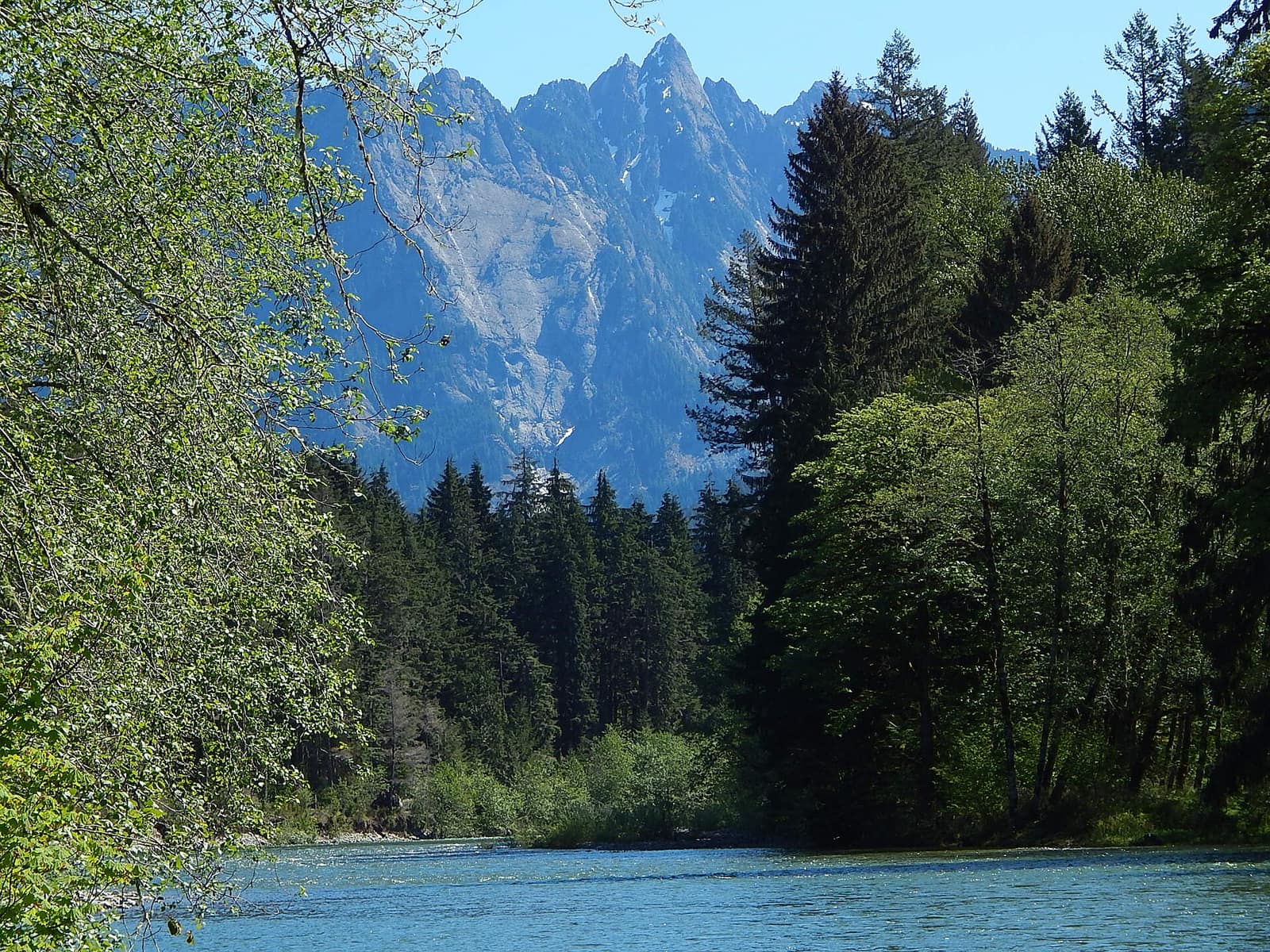
Hero photo: Mount Garfield and Middle Fork Snoqualmie River by Ron Clausen, licensed CC BY-SA 4.0, via Wikimedia Commons. Resized.