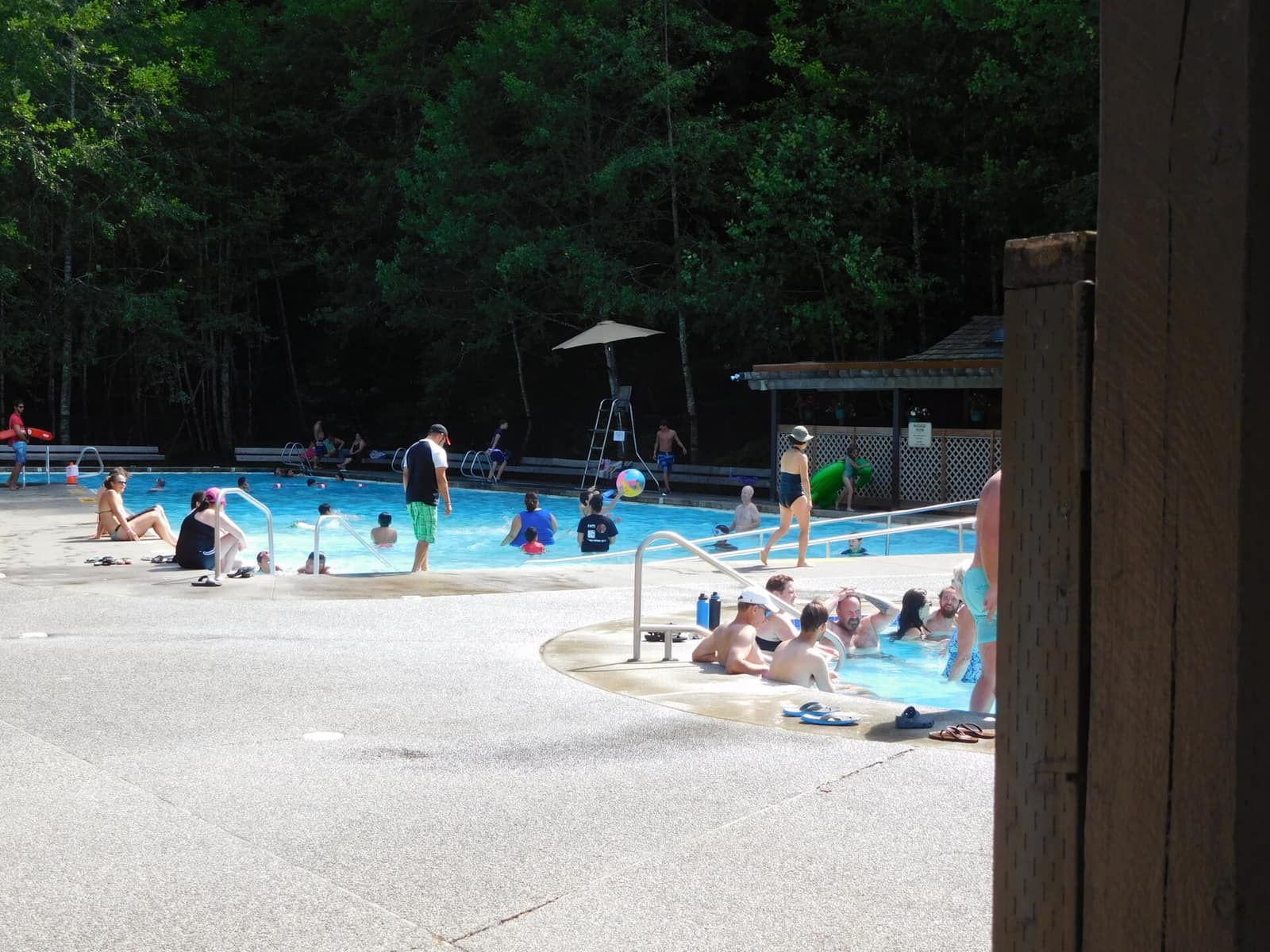
Washington has a wider range of hot springs than most visitors expect. You can drive to a mineral resort inside Olympic National Park and soak in a heated pool within an hour of Port Angeles. Or hike 2.5 miles into old-growth forest to a stack of primitive pools that cost nothing and have no attendants. Or pull off Highway 14 in the Columbia River Gorge for a century-old resort that draws day-trippers from Portland and Seattle alike. Hot springs in Washington State range from fully developed to completely primitive, from free to reservation-required, and from the Olympic Peninsula to the Cascades foothills. This guide covers the main options with what you need to know to pick the right one for your trip.
Sol Duc Hot Springs: The Olympic Peninsula’s Resort Pools
Sol Duc Hot Springs Resort sits at the end of the Sol Duc Valley in Olympic National Park, about 40 miles southwest of Port Angeles. The resort has operated in some form since the early 1900s and today offers three developed mineral pools plus a freshwater pool for rinsing. Pool temperatures run around 99 to 104°F depending on the season.
Getting there requires no hiking: the road from Highway 101 follows the Sol Duc River through old-growth Douglas fir and western hemlock for 12 miles before reaching the resort. The pools are open to day visitors during resort season (typically May through October), though hours vary. Reservations are recommended for summer weekends.
The surrounding area adds to the visit. Sol Duc Falls, a dramatic two-tiered drop into a narrow canyon, is 1.6 miles round trip from the resort parking area. Combining a morning soak with the falls trail makes a straightforward two-part day.
For everything you need to plan the visit, including fees, seasonal hours, and what the pools are actually like, see our Sol Duc Hot Springs guide.
Olympic Hot Springs: Free Backcountry Pools in Olympic National Park
Olympic Hot Springs are the opposite of Sol Duc: primitive, free, and reached only on foot. The pools sit 2.5 miles up the Boulder Creek Trail from the end of Appleton Pass Road, arranged in a loose staircase along a hillside in old-growth forest. Water temperatures vary by pool, from around 80 to 105°F. There are no facilities, no admission fee, and no changing rooms.
The hike in is one of the easier backcountry approaches on the Olympic Peninsula, gaining about 400 feet over 2.5 miles. Most visitors treat this as a day trip from Port Angeles or the Sequim area. A Northwest Forest Pass or America the Beautiful pass is required to park at the trailhead.
Current access depends on road and trail conditions, which can shift with winter storm damage well into spring. Check the NPS Olympic National Park site for current status before making the drive. When the trail is open, this is one of the most satisfying half-day trips on the peninsula.
See our Olympic Hot Springs guide for trail details, pool conditions, and current access notes.
Carson Hot Springs: Columbia River Gorge Mineral Baths
Carson Hot Springs sits near the town of Carson in Skamania County, on the Washington side of the Columbia River Gorge. Less than an hour from Portland and about 2.5 hours from Seattle, it fits into a different planning scenario than the Olympic Peninsula sites. This is a day trip from the Portland metro or a detour on a Gorge road trip rather than a standalone destination.
The resort has been operating since 1876. The mineral water comes out of the ground at around 126°F and is cooled before entering the bathhouse tubs. The experience is deliberate and old-fashioned: individual soaking tubs, a short soak, and an optional massage. There is no spa atmosphere, no mood lighting, no cucumber water.
The location pairs well with the surrounding area. Wind River Highway runs north from Carson through old-growth forest toward the Gifford Pinchot National Forest. Beacon Rock State Park, a short drive east, has a trail that gains 700 feet in under a mile to the summit of a 848-foot basalt monolith on the Columbia’s shore.
For details on planning a Carson visit, including what the baths look like and what else to do nearby, see our Carson Hot Springs guide.
Baker Hot Springs: Primitive Pools in the North Cascades Foothills
Baker Hot Springs is the least-visited of Washington’s accessible hot springs, and that scarcity is most of its appeal. The pools sit in the Mount Baker-Snoqualmie National Forest, about 16 miles northeast of Concrete off Forest Road 11. The access road is paved to Baker Lake and gravel beyond; high-clearance vehicles are better, though passenger cars make the drive most of the year when the road is open.
From the parking area, the walk to the pools is roughly a quarter-mile on an informal path through forest. The pools are natural and maintained by no one: no fee, no reservation system, no developed facilities. Water temperatures run around 104°F. The setting is fern and cedar, with a small creek running nearby.
The site is day-use only and heavily visited on summer weekends. A midweek visit between July and September offers more space and quieter water. Cell service is minimal. Bring everything you need: drinking water, a change of clothes, snacks.
The nearest camping is at Horseshoe Cove Campground or Panorama Point Campground on Baker Lake, both operated by the U.S. Forest Service and reservable through Recreation.gov. For current road and access conditions, the Mount Baker-Snoqualmie National Forest website is the most reliable source.
How the Four Sites Compare
For planning purposes, Washington’s accessible hot springs fall into two categories:
Resort and developed sites (Sol Duc, Carson): Both require fees and operate on seasonal schedules. Sol Duc is inside a national park and draws visitors already on the Olympic Peninsula. Carson draws a day-trip crowd from Portland and the Gorge corridor. Both have consistent water temperatures and facilities.
Primitive sites (Olympic Hot Springs, Baker Hot Springs): Both are free. Both require a short hike or walk. Olympic Hot Springs requires a national park pass for trailhead parking; Baker requires nothing beyond the drive. Neither has changing facilities or consistent maintenance.
If you’re combining hot springs with a longer trip, the Olympic Peninsula pairs Sol Duc and Olympic Hot Springs in the same general area. You can visit both in a single well-timed day, soaking at Sol Duc in the morning and hiking to Olympic Hot Springs in the afternoon, though the drive between the two takes about an hour.
Carson fits naturally into a Columbia River Gorge itinerary that also includes the Gorge scenic byway and the Washington-side river road. Baker Hot Springs slots into a North Cascades visit that includes Baker Lake, Picture Lake, or Heather Meadows above the ski area.
For a broader Olympic Peninsula road trip that weaves together hot springs, coastal beaches, rainforest trails, and lake stops, see our full itinerary. If you’re staying overnight near Sol Duc or Olympic Hot Springs, our Olympic National Park camping guide covers the main options across the park.
Best Time to Visit Washington Hot Springs
Each site has its own seasonal constraints:
Sol Duc runs on a resort schedule, typically May through October. Peak summer (July through August) means the pools are busiest. September and early October often hit the best balance: the road is clear, the trees are turning along the Sol Duc River, and the resort crowds thin after Labor Day. Reserve in advance for summer weekends.
Olympic Hot Springs depends on road and trail conditions, which can be disrupted by winter damage into late spring. Summer and early fall are the most reliable window, but always verify access with the NPS before driving out.
Carson Hot Springs is open year-round, which makes it the best option in winter or spring when the Olympic Peninsula sites are closed or limited.
Baker Hot Springs is accessible when Forest Road 11 is open, typically May through November depending on snowfall. Check with the Mount Baker Ranger District before making the drive.
What to bring for any of the sites:
- Swimsuit and a towel you don’t mind getting mineral-stained (the water leaves a film on fabric)
- Sandals or water shoes for concrete pool surrounds or rocky pool bottoms at primitive sites
- Drinking water before and after soaking, since the heat accelerates dehydration
- Extra layers for the walk back: stepping out of 104°F water into cool Northwest forest air is a real temperature drop
- Cash at sites that prefer it, including Carson, which has historically not taken cards for the baths
Getting There from Seattle and Portland
From Seattle to Sol Duc Hot Springs: Cross Hood Canal on the floating bridge at SR-104, then follow Highway 101 south and west around the peninsula to the Sol Duc Valley turnoff. About 3.5 to 4 hours. A Washington State ferry from Edmonds to Kingston shortens the drive slightly but adds loading time.
From Seattle to Baker Hot Springs: Drive north on I-5 to Burlington (exit 230), then east on Highway 20 to Concrete. Follow Baker Lake Road north to Forest Road 11. About 2 hours from Seattle.
From Seattle to Olympic Hot Springs: Route similar to Sol Duc, roughly 4 hours. The final access road branches off Highway 101 near the Elwha Valley.
From Portland to Carson Hot Springs: Drive east on I-84 to Cascade Locks, cross the Bridge of the Gods into Washington, and follow Highway 14 east a few miles to Carson. Roughly 45 to 55 minutes.
From Portland to Sol Duc or Olympic Hot Springs: Plan on 5 to 6 hours. An overnight in Port Angeles or Sequim makes the Olympic Peninsula options more reasonable from the Oregon side.
For a full overview of Washington’s national parks, including the Olympic, Rainier, and North Cascades complexes, see our parks guide.
Hero photo: Large hot spring resort (29458937070) by Robert Ashworth from Bellingham, WA., USA, licensed CC BY 2.0, via Wikimedia Commons. Resized.
.jpg)