You’re driving north on State Route 20, saltwater visible between the trees, and you pull into the Deception Pass State Park lot. A sign at the entrance says you need a Discover Pass displayed in your window. Without one, you pay a $10 day-use fee on the spot, or you turn around.
That scene plays out thousands of times every summer across Washington State. The Discover Pass is not a minor administrative detail. It’s the key to more than 120 state parks, 2.6 million acres of Department of Natural Resources land, and millions of acres managed by Washington Department of Fish and Wildlife. If you’re planning serious time outdoors in Washington, buying one before you go is the smarter move.
Here’s everything you need to know about the Discover Pass in Washington State.
What Is the Washington State Discover Pass?
The Discover Pass is a vehicle recreation permit required to park at state recreational lands managed by three Washington agencies: Washington State Parks, the Washington Department of Natural Resources (DNR), and the Washington Department of Fish and Wildlife (WDFW).
Washington’s legislature created it in 2011 to replace general fund revenue that had historically supported parks and recreation areas. After budget cuts reduced that funding, the state shifted costs toward the people who actively use the lands. The result was a single pass that covers a wide range of outdoor recreation sites statewide.
The pass is tied to your license plate number for the annual version, displayed on your rearview mirror or dashboard. It’s non-transferable between vehicles. If you bring two cars, you need a second-vehicle add-on.
One Discover Pass covers the vehicle, not the number of people inside it. Four people road-tripping in one car pay the same as one person driving alone.
How Much Does the Discover Pass Cost?
Annual pass: $30. Valid for 12 months from the purchase date, for one registered vehicle. Add a second vehicle for $10, making it $40 total.
Single-day pass: $10. No plate registration required. Good for one calendar day at any qualifying site.
For most visitors staying in Washington for more than three days and planning to visit multiple parks, the annual pass is the clear choice. Three single-day fees would already exceed its cost. Even if you’re buying it only for a one-week trip, $30 covers everything with room to spare.
Where Is the Discover Pass Valid?
The Discover Pass covers three separate land management systems:
Washington State Parks (the most relevant for visitors): All 120 state parks require the pass for vehicle parking. Deception Pass State Park on Whidbey Island, Cape Disappointment State Park on the Long Beach Peninsula, Moran State Park on Orcas Island, Palouse Falls State Park in eastern Washington, and Lime Kiln Point State Park on San Juan Island are among the most popular.
Department of Natural Resources (DNR) lands: Includes trailheads, boat launches, and dispersed recreation areas on 2.6 million acres of state trust lands. Most DNR trailheads in the Okanogan Highlands, Teanaway Community Forest, and Capitol State Forest require the pass at the parking area.
Washington Department of Fish and Wildlife (WDFW) lands: Wildlife areas managed for hunting, fishing, and wildlife viewing also require the pass for vehicle access. If you’re planning to visit a WDFW access site on the Columbia River or along the Yakima River, you’ll need it.
What the pass does not cover:
- National parks (Olympic, Mount Rainier, North Cascades) require the America the Beautiful pass or a park-specific entry fee paid separately
- National Forests (Okanogan-Wenatchee, Gifford Pinchot, Mt. Baker-Snoqualmie) require a Northwest Forest Pass, not a Discover Pass
- Sno-Parks require a separate Sno-Park Permit for winter parking at snowmobile and cross-country ski areas from November 1 through March 31
- City, county, and regional parks have their own fee structures and are not covered
If your itinerary mixes national parks with state parks, budget for both permits. Check the specific land manager for each site before you go.
How to Buy the Discover Pass
Online at discoverpass.wa.gov: The most reliable option for visitors. You enter your license plate number and a pass is mailed to you. Allow 7 to 10 days for delivery before your trip. If your trip is sooner, choose in-person pickup instead.
During vehicle license tab renewal: Washington residents who renew their vehicle registration online can add the Discover Pass for $30 during checkout. This is how many locals keep their pass current each year without thinking about it.
At participating retailers: REI, Fred Meyer, and Bi-Mart locations near major recreation areas stock both annual and single-day passes. REI locations in Seattle, Bellevue, Tacoma, and Olympia typically carry them year-round. Smaller outdoor gear shops near trailhead towns (Winthrop, Leavenworth, Port Townsend) often carry them seasonally.
At the park: Many parks have self-pay iron rangers at trailheads and day-use areas where you can buy a single-day pass for $10 by cash or credit card. Not all sites have staffed entrance stations, and some self-pay kiosks run out of day passes during peak summer weekends. Don’t count on this as your primary option.
Display requirements: Your pass must be clearly visible. If you bought the annual pass online and it’s still in a drawer, you can still get a parking citation. Hang the mirror tag facing outward, or place the flat permit face-up on the dashboard where it’s visible through the windshield.
Best Washington State Parks to Visit with Your Discover Pass
The pass is valid at 120 parks. These are worth putting at the top of your list:
Deception Pass State Park is Washington’s most visited state park, and for good reason. The bridge over Deception Pass connects Whidbey Island to Fidalgo Island over a churning tidal channel, and the views from the bridge walkway stop hikers mid-step. The park spans 4,000 acres with 38 miles of trails, two freshwater lakes, saltwater beaches, forested campgrounds, and some of the best tidal pools in the state. Summer weekends fill the parking lots by 9am. Arrive early or on a weekday.
Cape Disappointment State Park sits at the mouth of the Columbia River on the southwest tip of Washington’s Long Beach Peninsula. Two lighthouses (Cape Disappointment and North Head), miles of Pacific Ocean beach, the Lewis and Clark Interpretive Center, and Sitka spruce forest make it a full-day destination. The views from the Cape Disappointment Lighthouse trail, looking south over the Columbia’s bar and north up the coast, are among the most dramatic in Washington.
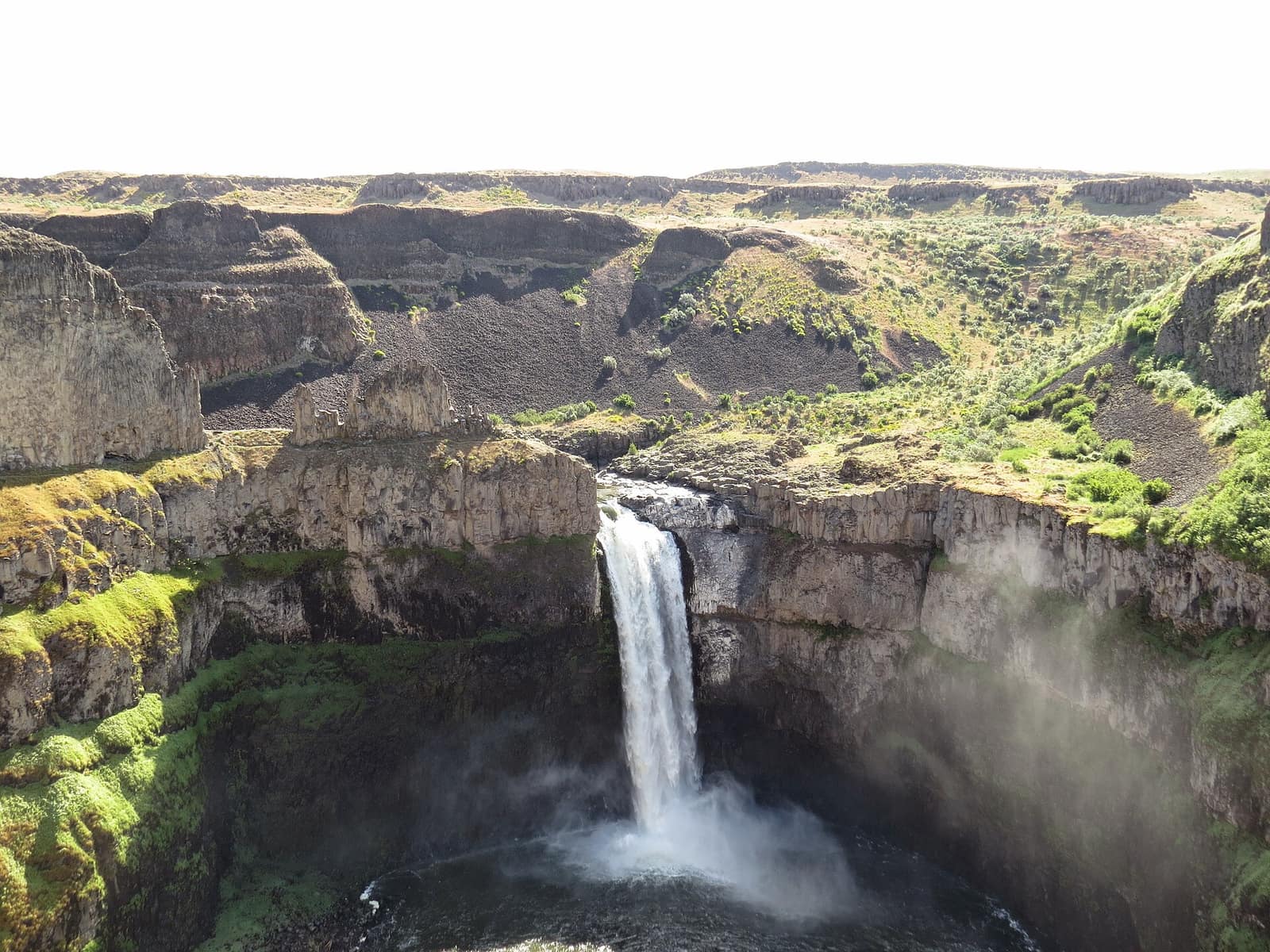
Palouse Falls State Park in eastern Washington rewards the drive to a remote canyon in the channeled scablands. The 198-foot waterfall drops into a basalt bowl carved by the same Ice Age megafloods that shaped the entire region. The main overlook is a short walk from the parking area. The longer canyon trail requires more attention on loose terrain, but takes you down to the river below the falls. Plan an hour or two, and note that the drive is long, flat, and worth every mile.
Moran State Park on Orcas Island offers something rarer: a state park reached only by Washington State Ferry from Anacortes. At over 5,000 acres, it’s one of Washington’s largest parks. Mount Constitution rises 2,409 feet above sea level, reachable by a summit trail or a paved road. From the stone observation tower at the top, you can see the full San Juan archipelago, the Canadian Gulf Islands, the Cascade Range, and, on clear days, Mount Rainier and Mount Baker.
Lime Kiln Point State Park on San Juan Island is the only U.S. park designated specifically for whale watching from shore. Southern Resident orca pods pass close to the rocky shoreline between May and October, following salmon runs through Haro Strait. Show up around tide changes when the whales tend to be more active near the kelp beds. The historic Lime Kiln Lighthouse, built in 1919, frames the view.
Steamboat Rock State Park sits on a basalt mesa rising 800 feet above Banks Lake in the Grand Coulee region of eastern Washington. The landscape looks nothing like the western side of the state: volcanic columns, deep blue reservoir, sage-scented high desert. The park has a popular campground and a trail to the top of the mesa with sweeping views across the coulees. If you’re driving across the state and want to stop somewhere that isn’t a gas station, this is the stop.
Free Days, Exemptions, and Winter Differences
Washington State Parks designates several fee-free days each year when the Discover Pass is not required at state park sites. These typically include Martin Luther King Jr. Day in January, Presidents Day in February, and a few additional dates throughout the year. Check the Washington State Parks website (parks.wa.gov) for the current year’s schedule before you plan around one.
Disabled veterans: Washington State residents who are disabled veterans may qualify for a free lifetime Discover Pass through the Washington State Parks Commission. Documentation of disability rating is required.
Sno-Park season: From November 1 through March 31, the Discover Pass does not cover Sno-Park designated lots, which serve snowmobile staging areas and cross-country ski trailheads. A separate annual or one-day Sno-Park Permit is required at those specific lots during winter.
Arriving without a vehicle: The Discover Pass applies to vehicle parking only. If you walk or bike into a state park, you don’t need one. Some parks with day-use fees for facilities (swim beaches, interpretive centers) charge separately from the parking requirement.
Planning Your Washington State Parks Trip
The best time to visit Washington State for park access is June through September. Western Washington parks stay relatively open year-round, though winter brings steady rain, muddy trails, and occasional road closures. Eastern Washington parks like Palouse Falls and Steamboat Rock are often more comfortable in spring (April to May) and fall (September to October), when summer heat and crowds both ease up.
Campground reservations at high-demand parks book months in advance. Deception Pass and Cape Disappointment fill for summer weekends by February or March. Check the Washington State Parks reservation system (washington.goingtocamp.com) as soon as you know your dates.
For day trips from Seattle: Deception Pass State Park is 90 minutes north on I-5 and State Route 20. Beacon Rock State Park in the Columbia River Gorge is roughly 3 hours south on I-5 and State Route 14. Most major state parks sit within a half-day’s drive of the Puget Sound metro area.
Buy the Discover Pass before you arrive. At $30 for a full year, it costs less than a single tank of gas and opens more than 120 parks. The ones worth seeing aren’t going to disappoint.
Hero photo: Palouse Falls State Park - M. Christopher Jenkins by Mcjenkins, licensed CC BY-SA 4.0, via Wikimedia Commons. Resized.