The name is misleading. John Meares, the British explorer who christened this headland in 1788, was frustrated it wasn’t the entrance to the fabled Northwest Passage. He was wrong about the passage, but he wasn’t wrong about the cape. Cape Disappointment State Park sits at the southwestern tip of Washington State, where the Columbia River ends its 1,243-mile journey and collides with the Pacific Ocean. The result is one of the most dramatic shorelines in the state: two working lighthouses on basalt headlands, miles of driftwood-strewn beach, old-growth Sitka spruce forest, and history layered into every trail. This guide covers everything you need to plan your visit.
Where Cape Disappointment Sits
Cape Disappointment State Park occupies 1,882 acres on the Long Beach Peninsula, the narrow spit of land extending south from Grays Harbor down to the Columbia River mouth. The nearest town is Ilwaco, a small fishing community about a mile north of the park entrance. Portland sits roughly 2.5 hours to the southeast via I-5 and US-30; Seattle is about 3.5 hours north via I-5 and US-101.
The Columbia River bar has claimed hundreds of ships since European exploration began. Strong currents, shifting sandbars, and frequent fog combine to create what mariners called the “Graveyard of the Pacific.” The United States Life-Saving Service established a rescue station here in 1877, and the park grounds still contain historic structures from that era alongside the Lewis and Clark Interpretive Center on the bluff above the lighthouse.
The park draws around half a million visitors per year. It’s busy in July and August, quiet from October through March, and particularly dramatic during Pacific storms when the headlands take the full force of the ocean. If you’re deciding when to make the trip, the month-by-month Washington visitor guide breaks down conditions across the state, including the coast.
Two Historic Lighthouses
Cape Disappointment State Park contains two active lighthouses, both accessible on foot from the park’s trail system.
Cape Disappointment Light dates to 1856, making it the oldest standing lighthouse in Washington State. The 53-foot white octagonal tower sits on a basalt promontory south of Baker Bay, positioned to guide ships through the Columbia River bar. The light remains active under United States Coast Guard maintenance. You reach it via the Cape Disappointment Trail, a 1.8-mile loop that climbs through shore pine and Sitka spruce before emerging at the tower and delivering clear views over the river mouth and the Pacific horizon.
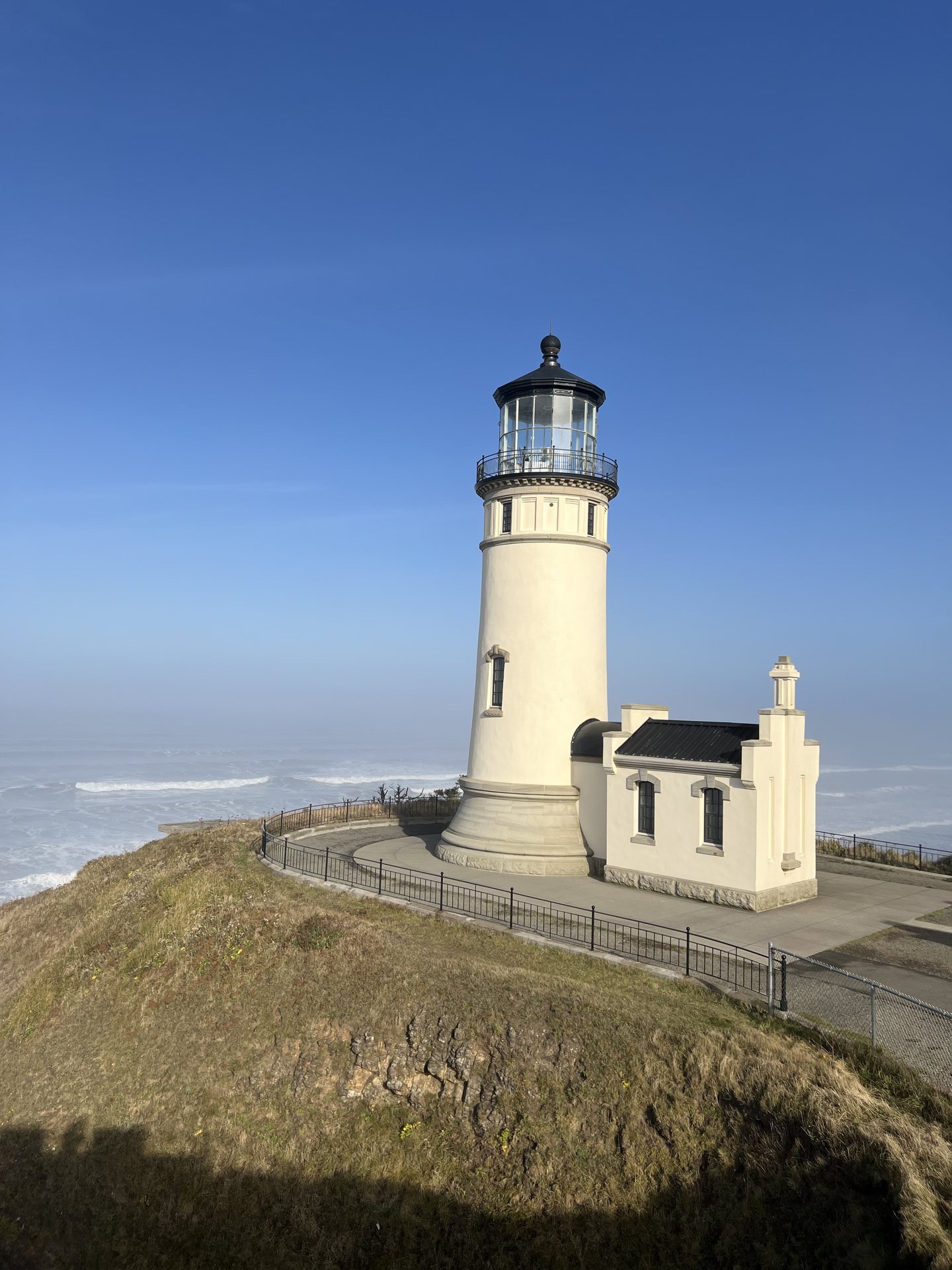
North Head Lighthouse stands about two miles up the coast from Cape Disappointment Light, on a promontory that faces due west into the open ocean. It was built in 1898 specifically because Cape Disappointment Light was invisible to ships approaching from the north: the headland itself blocked the view. North Head is one of the windiest locations on the entire Pacific Coast, with recorded gusts exceeding 100 mph during winter storms. The 65-foot tower offers long views south toward the Columbia River and north toward the outer Washington coast on clear days.
Washington State Parks offers ranger-led tours of the North Head Lighthouse grounds (check current seasonal schedules at the park entrance). Several lighthouse keeper’s residences on the property are available as short-term vacation rentals for visitors who want to stay on the headland overnight.
Hiking the Trails
The park’s trail network is modest in total mileage but varied in character. Most routes are suitable for families and casual hikers, with no significant elevation gain required.
Cape Disappointment Trail (1.8 miles, loop): The main route to the lighthouse, starting from the Waikiki Beach day-use parking area. The trail climbs through a mix of spruce, shore pine, and native coastal scrub before reaching the lighthouse and the views beyond. On clear days you can see the Oregon coast across the bar. This is the most-used trail in the park, so arrive early in peak summer to avoid the parking crunch.
Coastal Forest Trail (1.5 miles, one-way): A connector path through old-growth Sitka spruce and western red cedar, linking the day-use area to the North Head Lighthouse trailhead. The canopy is denser here than on the Cape Disappointment Trail, and the route sees fewer visitors.
North Head Trail (1.3 miles, one-way): From the North Head parking area to the lighthouse, following the headland ridge with intermittent views through the trees. The final approach opens up to a wide coastal panorama.
Waikiki Beach Trail (under 0.5 miles): A short path down from the day-use parking area to Waikiki Beach, the park’s sheltered cove on the Columbia River side. Easy, flat, and worth adding to any lighthouse hike as a starting or finishing point.
Discovery Trail (8 miles, one-way, paved): A paved multi-use path connecting the park to downtown Long Beach. Flat and wide, it’s popular with cyclists, families with strollers, and joggers. The trail traces the beach the Lewis and Clark Corps walked during their weeks at the Pacific in 1805-1806. You can do as much or as little of it as you want; most visitors walk the first mile or two and turn back.
Beaches and the Columbia River Mouth
The park’s shoreline divides into two distinct types, separated by the cape headland.
On the Columbia River side, Baker Bay and Waikiki Beach offer calmer conditions. Baker Bay is a staging area for commercial and sport fishing boats accessing the river. Waikiki Beach is good for wading, picnicking, and watching the container ships and tankers navigate the bar. The views across to Oregon’s Fort Clatsop are clear on calm days.
On the ocean side, Benson Beach extends north from the cape headland for about a mile. This is a classic Pacific coast experience: wide, windswept, covered in driftwood logs, and subject to the full force of the ocean. Surf fishing for redtail surfperch and striped bass is popular here. Razor clam digging is permitted seasonally on this stretch of coast; check the Washington Department of Fish and Wildlife website for current approved openings before you go.
The Columbia River bar generates powerful and unpredictable currents where the river meets the ocean. Swimming is not recommended on the ocean-facing beaches. Rip currents form without warning near the bar, and the water temperature runs cold year-round.
During gray whale migration seasons (northbound in March and April, southbound in November and December), the headlands at Cape Disappointment are reliable land-based viewing spots. Bring binoculars and find a position on the upper cliff trail with a clear line of sight west.
The Lewis and Clark Interpretive Center
The Lewis and Clark Interpretive Center at Cape Disappointment State Park sits on the bluff above the lighthouse, built into the former Coast Artillery fortification. The Corps of Discovery arrived at this cape in November 1805 after traveling more than 8,000 miles from their winter camp near St. Louis. Captain William Clark climbed this same headland and looked out over the Pacific. The journals record the moment with typical understatement.
The interpretive center uses expedition journals as its primary source material, tracing the route from the Missouri River to the Columbia River mouth through original maps, artifacts, and reproductions. The centerpiece exhibits are positioned against floor-to-ceiling windows facing west over the ocean, placing you at the same cliff where Clark stood. A separate fee applies on top of the standard Discover Pass park entry, with reduced rates for children; check Washington State Parks for current pricing.
The eight-mile Discovery Trail running north to Long Beach is directly connected to this history. The route follows the beach the expedition walked while camped at the Columbia River mouth during the winter of 1805-1806.
Camping at Cape Disappointment
The park campground is one of the largest on the Washington coast, with 215 standard sites, 60 full-hookup RV sites, and three group camp areas. Sites range from open grassy spaces near the park road to more private spots surrounded by spruce forest. The campground is a reasonable walk from Benson Beach, the Cape Disappointment Trail, and the interpretive center.
Reservations open through washington.goingtocamp.com up to nine months in advance. Peak summer weekends fill quickly, particularly in July and August; book as early as the system allows if you’re visiting then. The campground operates year-round with reduced winter services. Pets are allowed on a standard six-foot leash throughout the park. Firewood is available for purchase at the entrance.
A Discover Pass is required for all vehicles entering the park, covering both day-use and camping entry. This is separate from the campsite reservation fee.
Planning Your Visit
Best time to go: Late June through September delivers the most reliable dry weather and the best trail conditions. October into November is worth considering for a different experience: Pacific storms roll in from the southwest, the light turns low and golden between squalls, and visitor numbers drop sharply. Spring (March through May) offers gray whale migration and lower crowds but requires waterproof gear on most days.
Getting there: From Portland, take I-5 north to Kelso/Longview, then US-30 west to Astoria, cross the Astoria-Megler Bridge into Washington State, and continue on US-101 north to Ilwaco. The Astoria-Megler Bridge at 4.1 miles is one of the longest continuous truss bridges in the United States, and the crossing over the Columbia River mouth is an attraction in itself. Total drive from Portland: about 2.5 hours. From Seattle, take I-5 south to Olympia, then US-101 west along the coast. Allow 3.5 hours.
Discover Pass: Required for all vehicles. Day passes cost $10; the annual pass runs $30 and covers all Washington State Parks. If you plan more than three state park visits in a year, the annual pass covers itself. The Washington State Parks directory lists other parks across the state worth combining into a longer trip.
Where to stay nearby: Long Beach is the closest town of any size, about five miles north of the park entrance, with motels, vacation rentals, and a handful of restaurants along Pacific Avenue. It makes a practical base for a two-night itinerary that includes the park, the Discovery Trail, and a drive north to Willapa National Wildlife Refuge.
Extend the trip: If you’re driving to Cape Disappointment from Portland, the Columbia River Gorge runs along your route. Carson Hot Springs, a mineral soaking resort in Skamania County, is about an hour east of the Astoria-Megler Bridge and makes a reasonable afternoon stop to add before or after your days at the park.