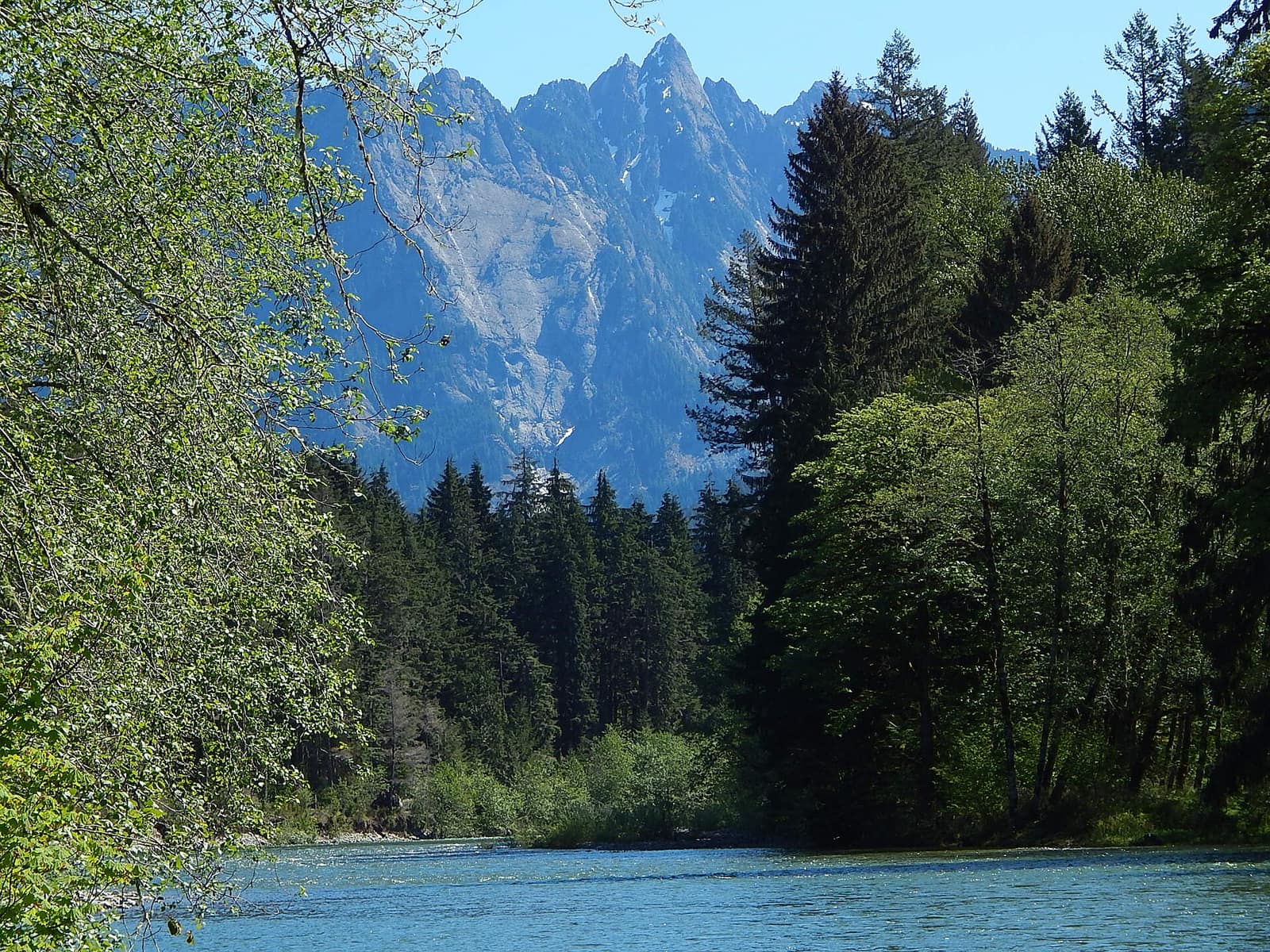
The road into the Sol Duc Valley descends through old-growth Douglas fir and western hemlock so tall they block the midday sun. By the time you pull into the resort parking lot, you’ve left cell service behind. Three oval pools of mineral water shimmer ahead of you, steam rising off the surface even on a June morning. Sol Duc Hot Springs has been drawing visitors to this corner of Olympic National Park since the early 1900s, and the appeal hasn’t changed: hot water, cold forest, and a trail to one of the most dramatic waterfalls in Washington. Here’s what to know before you drive in.
What Are Sol Duc Hot Springs?
Sol Duc (pronounced “sol-DYOOK”) takes its name from the Quileute words for “sparkling water.” The springs sit at the heart of the Sol Duc Valley, a forested drainage in the western interior of Olympic National Park. Entrepreneurs first developed them into a resort around 1912, envisioning a European-style spa destination in the Pacific Northwest. Fires destroyed the original hotel complex over the following decades, and the current operation run by Delaware North under a National Park Service concessionaire agreement is considerably more modest: a cluster of wood-frame cabins, a restaurant called Springs Restaurant, a small camp store, and the pool complex.
The spring water itself is geothermally heated, emerging from the ground at around 127°F before being cooled to usable temperatures. The three main soaking pools run between 98°F and 104°F, each slightly warmer than the next. A fourth pool holds cooler freshwater for rinsing or cooling down between soaks. There’s no sulfur odor here. The water has a faintly silky quality from the dissolved minerals, and the surrounding forest keeps the air cool even in August, making the contrast between hot pool and cool air one of the better sensory experiences in the park.
Getting to Sol Duc Hot Springs
From Seattle, the most common route runs through Bainbridge Island via the ferry from Coleman Dock downtown, then west on WA-305 to US-101 and through Port Angeles. From Port Angeles, it’s about 40 miles west on US-101 to the Sol Duc Road turnoff near Lake Crescent. From the turnoff, Sol Duc Road winds 12 miles south into the valley to reach the resort. Plan on 3.5 to 4 hours from downtown Seattle, factoring in ferry timing and traffic through Kingston and Sequim.
From Forks on the west side of the peninsula, the turnoff is 33 miles east on US-101, roughly 45 minutes. If you’re doing a longer Olympic Peninsula road trip, Sol Duc sits comfortably between Port Angeles and Forks, making it a natural overnight stop or half-day detour.
An Olympic National Park vehicle pass is required at the Sol Duc entrance kiosk. No separate fee to enter the valley. The park day pass runs $35 as of 2025; an America the Beautiful annual pass ($80) covers all federal lands and is worth it if you’re visiting more than two or three parks this year.
The Pools and What to Expect
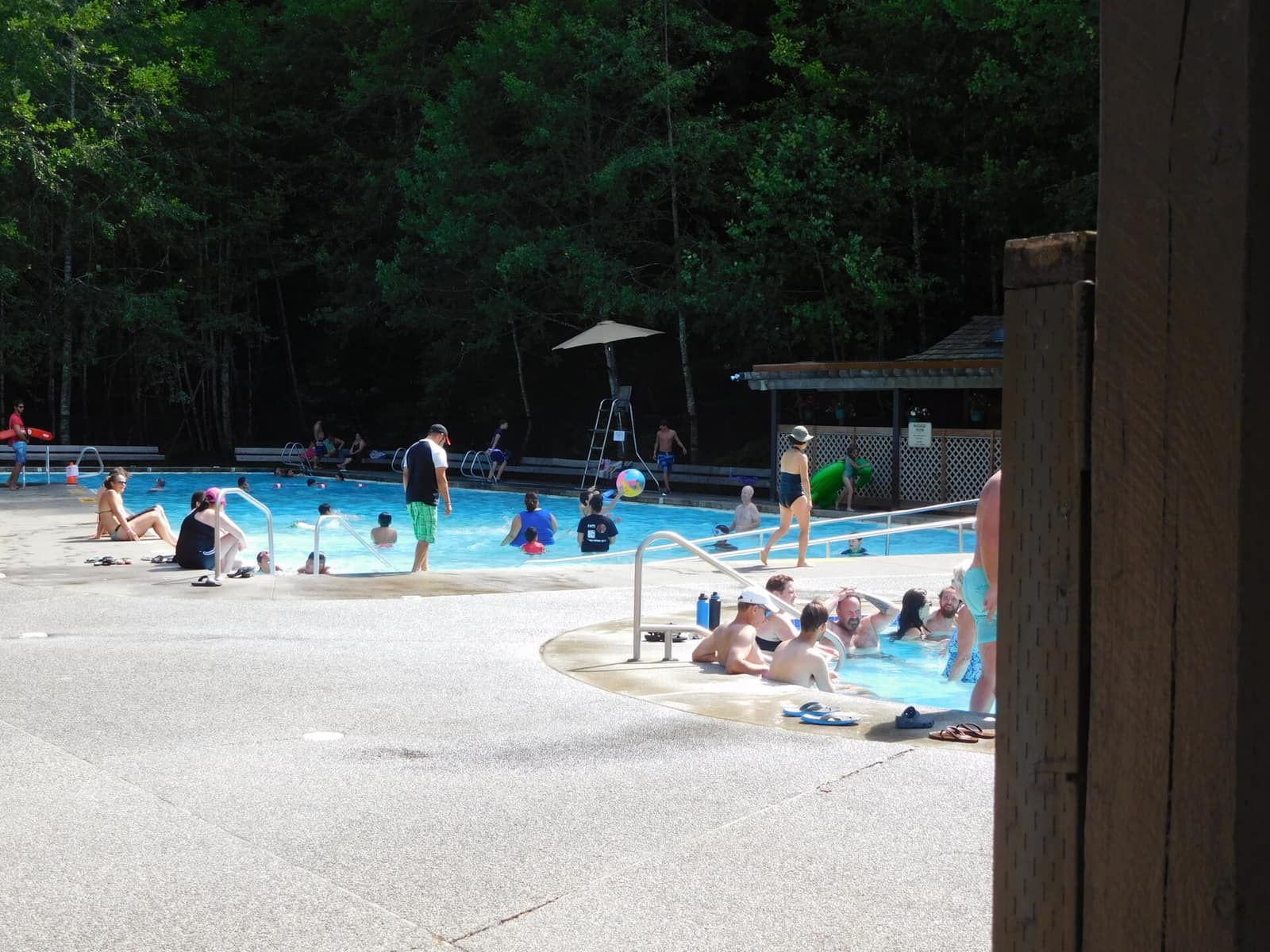
The pool complex is a short, flat walk from the resort’s main parking area. Three mineral pools sit side by side in a clearing, each a different temperature (roughly 99°F, 102°F, and 104°F, though the resort adjusts seasonally). A freshwater pool sits adjacent.
Bring your own towel. Towels are available for rent at the resort store, but they run out on busy summer weekends. Lockers are available near the changing rooms. Flotation devices are not allowed in the mineral pools; bathing suit required in all pools.
Day-use admission is charged separately from the park entrance fee. Current pricing (2025 season): $19 for adults, $14 for children 4 to 12, free for children under 4. Check the Olympic National Park website for current hours and rates before you go, since they can shift between seasons.
The pool experience is genuinely low-key. No swim-up bars, no cabanas, no attendants circling with towels. What you get is a well-maintained pool in a conifer forest, with a low constant murmur from the river nearby. People soak, rotate to the freshwater pool, soak again, and mostly leave each other alone. That’s the whole thing. If you need more than that, this isn’t your spot.
Sol Duc Falls: The Trail Worth Adding
The Sol Duc Falls trail is 1.6 miles round trip from its trailhead at the end of Sol Duc Road, about half a mile past the resort. The path is well-maintained, nearly flat, and shaded by old-growth Sitka spruce and western red cedar the entire way. Most hikers finish in under an hour.
The falls themselves are the payoff. The Sol Duc River splits into three channels and drops 48 feet through a narrow, moss-covered basalt gorge. A wooden footbridge spans the gorge directly above the falls for a straight-down view. The spray reaches you even in low-water periods.
Parking note: the Sol Duc Falls trailhead lot fills by mid-morning on summer weekends. Arriving before 9am or after 4pm avoids the wait. The resort area has its own separate lot that fills less quickly.
If Sol Duc Falls gets you interested in Washington’s more off-the-beaten-path cascades, our roundup of Washington’s hidden waterfalls worth the hike covers falls across the state that see far fewer visitors.
Where to Stay Near Sol Duc
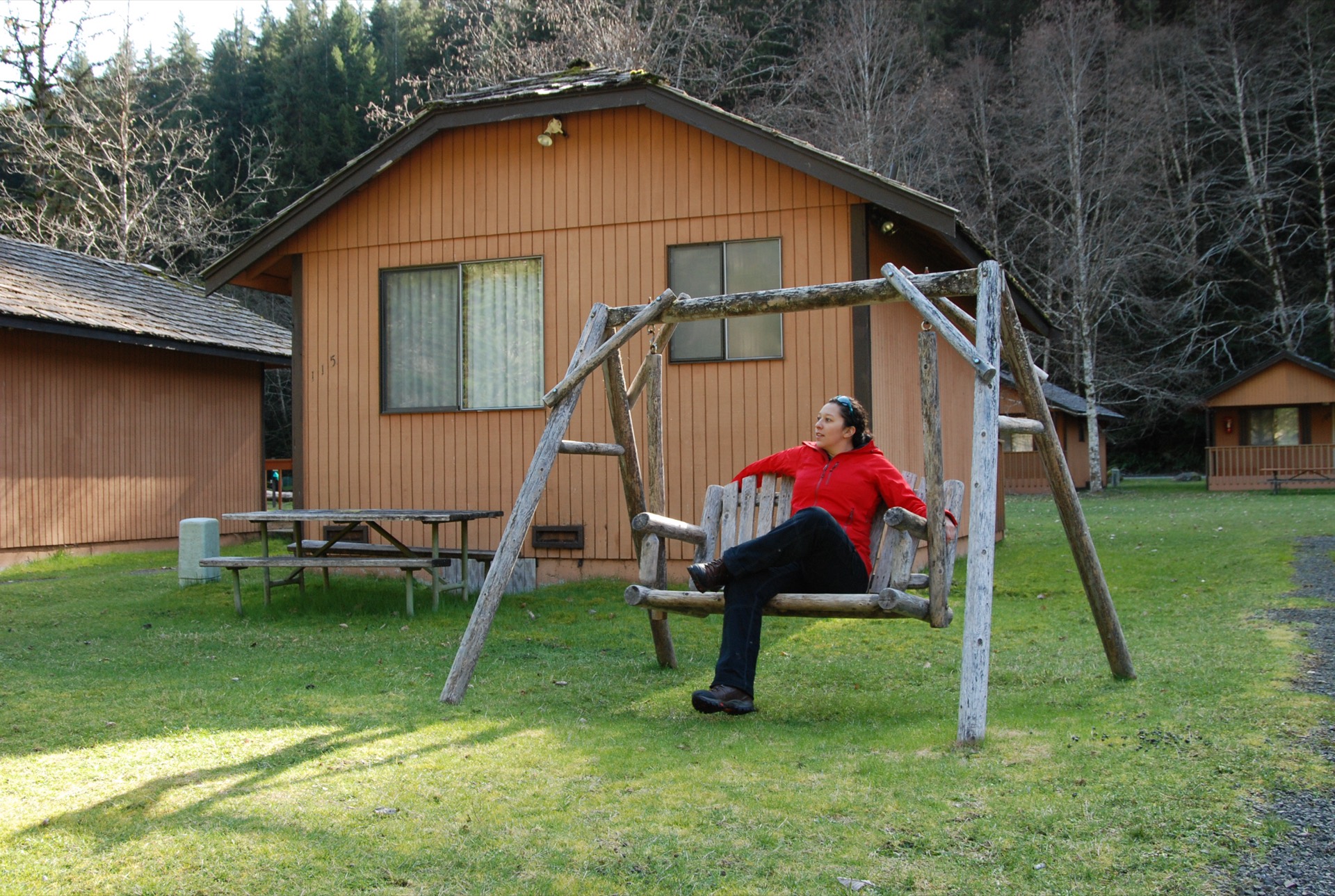
Sol Duc Resort cabins: Delaware North operates a collection of forest cabins ranging from basic duplex units to larger family cabins with kitchenettes. The on-site Springs Restaurant serves breakfast and dinner with a menu that covers the basics: eggs, burgers, salmon, beer, and wine. For summer and fall weekends, book four to six months out. Cabins sell out, especially in July and August.
Sol Duc Campground: The National Park Service operates this 82-site campground 0.5 miles from the resort along Sol Duc Road. Sites are reservable through Recreation.gov starting in January. The campground season runs roughly late April through October. Staying in the campground and walking to the pools each morning is one of the quieter ways to experience the valley, particularly on weekdays when day-use crowds thin out.
Port Angeles: If the resort is full, Port Angeles offers the broadest selection of conventional lodging at various price points. It’s 40 miles east, about 45 minutes from the Sol Duc turnoff. The city is also the gateway to Hurricane Ridge and the ferry to Victoria, so it functions well as a base for several days of exploration.
Best Time to Visit Sol Duc Hot Springs
The Sol Duc resort and pool complex operate seasonally, typically from late March through late October. Exact opening and closing dates shift by a few weeks year to year based on staffing and conditions. Confirm current dates on the NPS website before planning a spring or late-fall trip.
June is the practical sweet spot. The pools are open, wildflowers are appearing in the valley, Sol Duc Falls is running at full volume from snowmelt, and summer crowds haven’t peaked. July and August bring the highest visitor numbers; parking and pool capacity can both strain on weekend afternoons.
September is worth considering if your schedule allows. Cooler ambient temperatures make the contrast between hot pool and cold air more pronounced. The crowds drop after Labor Day, the forest takes on early color, and the drive in on Sol Duc Road is quieter. Lodging availability improves at the resort too.
For context on how Sol Duc fits into Washington’s broader travel seasons, our month-by-month guide to visiting Washington State covers what to expect across the whole state from January through December.
Practical Details Before You Go
Park entrance fee: Olympic National Park vehicle day pass is $35 as of 2025. The America the Beautiful annual pass ($80) covers it and every other federal land for 12 months.
Cell service: None in the Sol Duc Valley. Download offline maps (Maps.me or Google Maps offline) before you leave Port Angeles.
Pool reservations: Day-use pools are first-come, first-served on arrival. No advance reservation for pool access. Resort cabin reservations are made through Delaware North’s booking site.
What to bring: Towel, swimsuit, water bottle, cash or card for pool admission and the camp store, and layers. Even on an 80°F August day, the old-growth canopy along Sol Duc Road keeps the valley noticeably cooler than surrounding areas.
Dogs: Leashed dogs are allowed on paved roads within Olympic National Park but are not permitted on trails, including the Sol Duc Falls trail. The pool complex also does not allow pets.
Comparing Washington’s hot springs: If you’re exploring hot spring options across the state, Carson Hot Springs on the Columbia River Gorge is the other major developed soak in Washington, sitting just under two hours from Portland and worth pairing with a Gorge trip. Sol Duc and Carson serve different itineraries: Sol Duc is a park backcountry experience; Carson is a road-trip stop convenient to I-84.
Sol Duc rewards visitors who take their time with it. The drive in is part of the experience, the falls justify a detour even if you never touch the pools, and soaking in 103°F mineral water while looking up at 200-foot firs is a particular kind of good that’s hard to replicate anywhere else in the state.