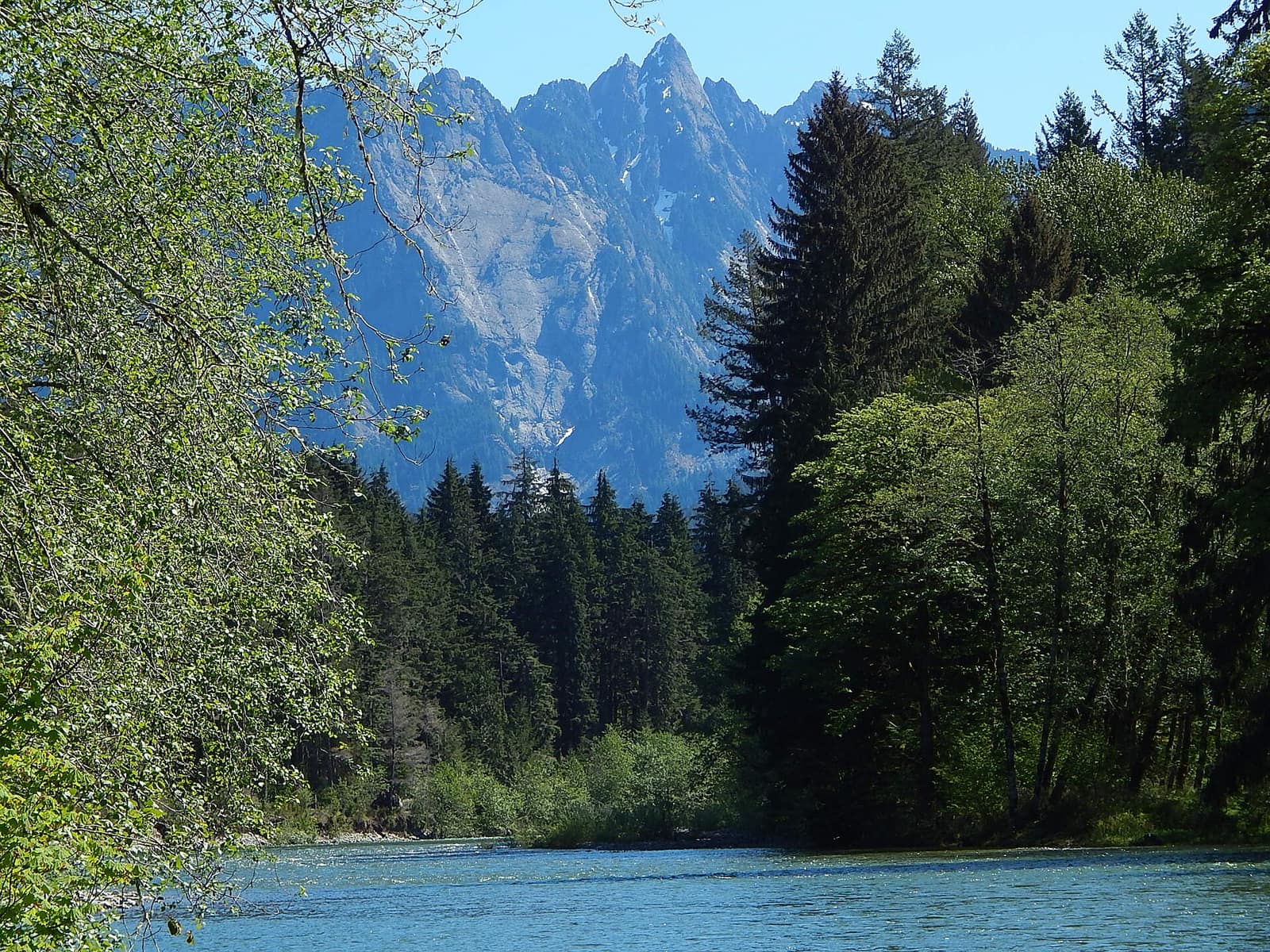
The drive east on State Route 20 doesn’t announce itself. You follow the Skagit River through farmland, then through small logging towns, and somewhere past Concrete the valley walls close in and the road starts to climb. By the time you reach the park boundary, the mountains are vertical, ice-covered, and close. North Cascades National Park holds more glaciers than any other place in the contiguous United States outside Alaska, and a landscape this extreme produces a list of things to do that goes well beyond a loop drive with scenic overlooks. Here’s what actually earns your time.
Hike to Cascade Pass and Sahale Arm
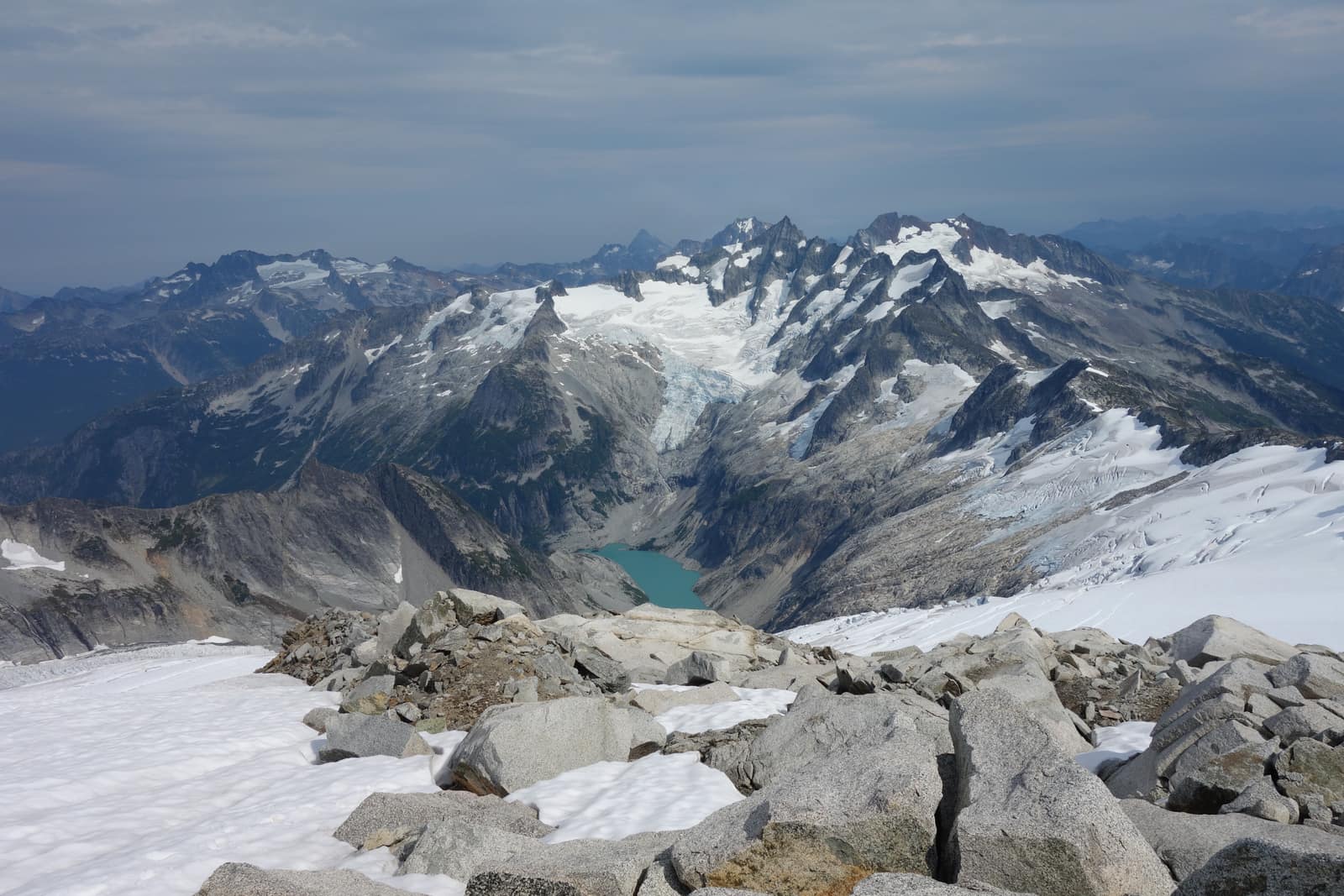
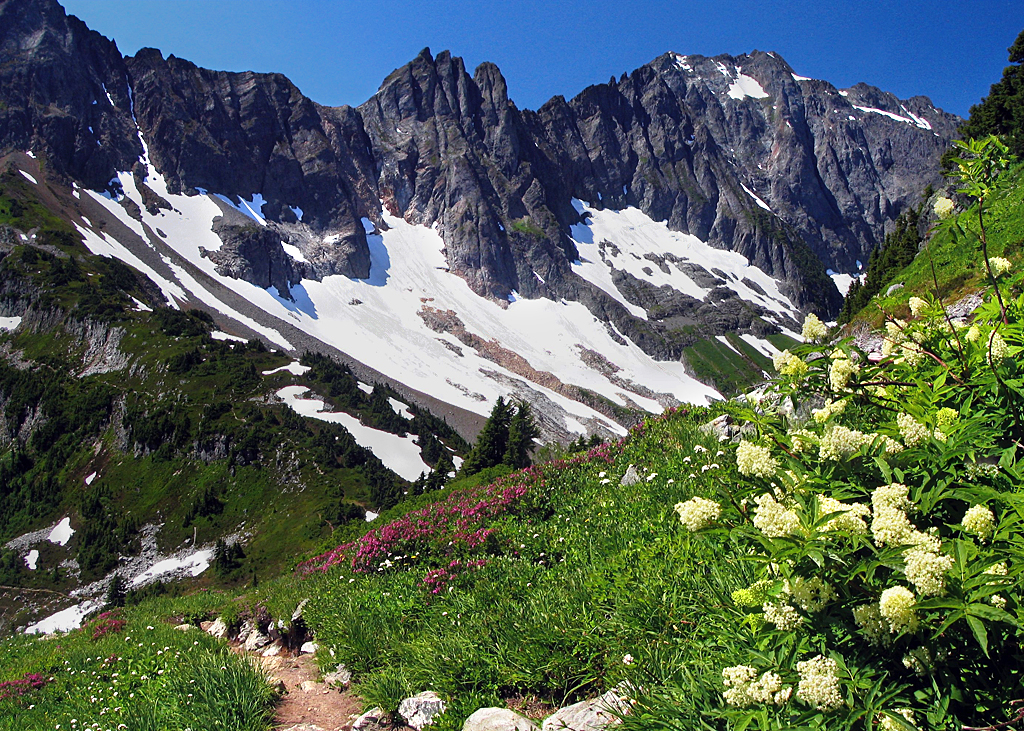
Cascade Pass is the park’s signature trail and one of the finest day hikes in Washington. The Cascade Pass Trail runs 7.4 miles round-trip from the trailhead at the end of Cascade River Road. The first 3.7 miles climb steadily through old-growth forest and subalpine meadows before arriving at the pass at 5,392 feet, where views open onto the Johannesburg Glacier to the north and Ptarmigan Ridge to the south.
From the pass, an optional extension to Sahale Arm adds 1.5 miles and 1,300 feet of elevation. At the top of the arm, you’re walking a narrow rocky ridge with near-360-degree views of glaciated peaks, including Sahale Mountain and Boston Basin. Mountain goats roam this terrain in late summer and often come within a few dozen feet of hikers. It’s among the most dramatic trail finishes in the state, and the route sees far fewer visitors than comparable destinations at Mount Rainier or Olympic National Park.
Getting there: Cascade River Road leaves Highway 20 at Marblemount. The gravel road is passable by most vehicles in summer but narrows significantly near the trailhead. Arrive by 8am on weekends to secure parking. Snow covers the upper trail through late June; mid-July to September is the reliable window.
Paddle Diablo Lake and Ross Lake
Diablo Lake’s color — that blue-green that looks almost artificially saturated — comes from rock flour: fine glacial sediment ground off by ice upstream and suspended in the water. The color deepens through summer as glacial melt increases, peaking in August and September.
The main access point is the Colonial Creek Campground boat launch off Highway 20. The lake is calm most mornings, making it manageable for kayaks and canoes. Seattle City Light, which operates the Skagit River hydroelectric dams, runs guided kayak tours in summer through advance reservation at the Diablo Lake Visitor Center.
Ross Lake stretches 24 miles north from Diablo all the way to the Canadian border and is reachable only by boat or a steep trail. Ross Lake Resort, the only overnight lodging inside the park itself, rents kayaks, canoes, and motorboats and operates a water taxi that shuttles guests to backcountry campsites along the lakeshore. If you have two days, paddling up Ross Lake to a boat-in campsite is one of the most satisfying experiences the park offers. For more on overnight options near the water, see our guide to camping in North Cascades National Park.
Drive the North Cascades Highway
State Route 20 is the only paved road through the park and one of the great scenic drives in the Pacific Northwest. The highway closes each winter from snowfall and typically reopens in April, running through November.
Two overlooks are worth stopping at:
Washington Pass Overlook: At 5,477 feet, this is the high point of the highway. A half-mile paved loop trail gives you a direct view of Liberty Bell Mountain and the Early Winters Spires — two sheer technical climbing routes that look impossibly vertical from the road. The walk takes about 20 minutes and is accessible for most visitors.
Diablo Lake Overlook: About 10 miles west of Washington Pass, this pullout gives you the best road-accessible view of the lake’s turquoise color against the dark slopes of the Colonial and Ruby ranges. Morning light is best for photography. A short trail descends to the Diablo Lake Trail, which circles parts of the shoreline if you want to stretch the stop into an hour.
East of Washington Pass, the Methow Valley drops away quickly, exposing the sharp shift from dense conifer forest to the drier, more open terrain of eastern Washington. The contrast makes the full Highway 20 corridor one of the better cross-Cascades drives in the state.
Explore Newhalem and the Skagit Project Towns
Newhalem is a company town owned by Seattle City Light, and it’s unlike any other community in a national park. The utility’s three Skagit River dams generate a large portion of Seattle’s electricity, and Newhalem was built to house the workers who run them. The streets are maintained and the gardens are tended, and there’s a scale model of the dam project at the Skagit Information Center.
The Trail of the Cedars is a paved half-mile loop through old-growth western red cedars that starts from Newhalem Campground. It takes under 30 minutes and is one of the flattest, most accessible walks in the park. Nearby, the Ladder Creek Rock Gardens are a stranger attraction: a series of cascading pools and terraced plantings built by a dam engineer in the 1920s, lit with colored lights on summer evenings.
Newhalem is also a good place to pick up maps and current trail conditions from the North Cascades Visitor Center before heading deeper into the park. The center has ranger staff through the summer season.
Watch for Wildlife in the Park’s Remote Corridors
North Cascades National Park supports one of the most intact large-mammal ecosystems in the lower 48 states. The park holds black bears, mountain goats, gray wolves (recolonized over the past decade), and wolverines, along with smaller populations of lynx, fishers, and pika at elevation. Sightings require patience and early starts, but there are better and worse places to look.
Mountain goats: The Sahale Arm extension above Cascade Pass is the most reliable goat habitat accessible by trail. Goats frequent the rocky ridgeline in late summer and are often not particularly concerned by hikers, making for close views.
Black bears: Most active at dawn and dusk in subalpine meadows during berry season. The lower section of the Cascade Pass Trail and the Maple Loop Trail near Newhalem both see regular bear activity in August and September. Carry bear spray and store food in a bear canister for any overnight trip.
Bald eagles: The Skagit River corridor, just west of the park boundary, hosts one of the largest winter bald eagle concentrations in the Lower 48. Between December and February, up to 600 birds gather along the river to feed on spawning chum salmon. The Upper Skagit Bald Eagle Interpretive Center in Rockport runs guided walks and vehicle tours during peak viewing weeks. If you’re planning a winter trip to the region, this is one of Washington’s most underrated wildlife experiences.
Take the Boat to Stehekin
Stehekin sits at the head of Lake Chelan, accessible only by boat, float plane, or a multi-day backpacking trip over Cascade Pass. There are no roads connecting it to the rest of Washington. The village has a permanent population of around 75 people, a one-room school, a post office, and the Stehekin Bakery, which opens early and produces cinnamon rolls the size of dinner plates that tend to sell out before 10am.
The Lake Chelan Boat Company runs two vessels out of the town of Chelan: the Lady of the Lake II (2.5 hours, year-round) and the faster Lady Express in summer (1.5 hours). A round-trip day visit gives you approximately three hours in Stehekin before the afternoon return boat. That’s enough time to rent a bike from the Stehekin Valley Ranch, ride the valley road north to Rainbow Falls (a 312-foot cascade about a mile from the dock), and eat lunch at the Stehekin Landing Restaurant before boarding.
For a longer stay, the Stehekin Valley Ranch and the North Cascades Lodge at Stehekin offer multi-night accommodation. Stehekin operates on its own schedule, unconnected to cell networks or the internet infrastructure most visitors assume is universal. That disconnection is the point.
Plan Your Visit
Best time to go: July through September is the most accessible season for hiking, paddling, and driving the full highway corridor. The Cascade Pass Trail is usually snow-free from mid-July through early October. Winter brings the bald eagle season along the Skagit River and occasional snowshoeing near Newhalem. For a broader look at timing across Washington’s parks, see our best time to visit Washington State guide.
Permits: There is no entry fee or America the Beautiful pass required for North Cascades National Park. Overnight backcountry camping requires a free permit from the Wilderness Information Center in Marblemount or via recreation.gov. Popular zones like the Boston Basin and the campsites above Cascade Pass fill up quickly in July and August. Book as soon as your permit window opens.
Getting there: The park is about three hours from Seattle. Take I-5 north to Burlington, then State Route 20 east. There is no public transit to the park itself. For Stehekin access, drive or take the train to Chelan and board the boat.
Where to stay nearby: Inside the park, Newhalem Campground is the most accessible option, with sites accessible to RVs and trailers. The Colonial Creek and Goodell Creek campgrounds offer alternatives along the highway. For lodging with more services, Winthrop and Mazama (east of the park) and Concrete and Marblemount (west) have motels, inns, and cabin rentals. For more information on trails and backcountry routes, the North Cascades trails page covers distances, difficulty ratings, and permit requirements. The North Cascades visitor information page has current hours and contact details for each visitor center.